Soft vs Rigid Lifting Belt | Which Is Better for Training?
Author: Harris Stability Systems Last Updated: 19 September 2026

When a Soft Lifting Belt Makes More Sense Than a Rigid Belt
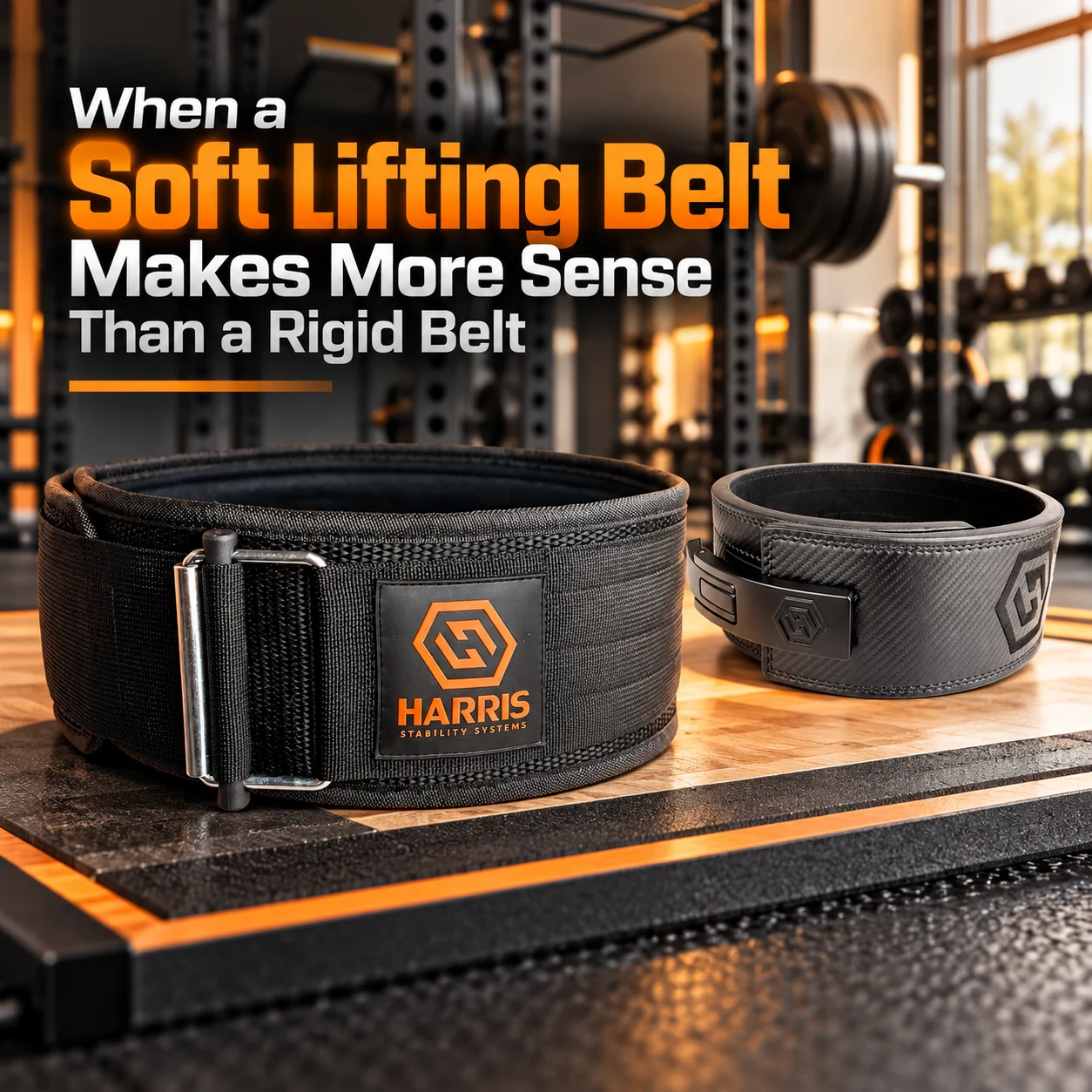
A rigid leather belt is not automatically the best choice for every workout.
For heavy squats, deadlifts and competition-style strength training, a rigid lever or prong belt may provide the firm feel many lifters prefer. However, sessions involving frequent exercise changes, conditioning work, higher repetitions or greater freedom of movement may be better suited to a soft lifting belt.
Soft lifting belts are generally made from flexible materials such as nylon or neoprene. They provide a surface to brace against without the hard, restrictive feel of a thick leather belt.
This guide explains when a soft lifting belt may make more sense than a rigid belt and how to choose between the two.
What Is the Main Difference Between a Soft and Rigid Lifting Belt?
The main difference is how the belt feels and behaves during training.
A soft lifting belt is designed to flex with the body. It is usually lighter, quicker to adjust and easier to wear across varied exercises.
A rigid lifting belt is designed to maintain its shape. It generally provides a firmer surface to brace against and is commonly used during heavy barbell training.
|
Feature |
||
|---|---|---|
|
Common materials |
Nylon or neoprene |
Leather |
|
Flexibility |
High |
Low |
|
Adjustment |
Quick |
Lever or prong closure |
|
Weight |
Lightweight |
Heavier |
|
Comfort across long sessions |
Usually higher |
Depends on fit and training |
|
Best suited to |
Mixed and fast-paced training |
Heavy strength work |
|
Movement restriction |
Lower |
Higher |
|
Competition use |
Limited and rule-dependent |
Common in powerlifting |
Neither style is universally better. The right choice depends on what the session requires.
When a Soft Lifting Belt Makes More Sense
During Sessions With Frequent Exercise Changes
Soft belts are often more practical when a workout includes several different movements.
Examples may include:
• Deadlifts
• Cleans
• Box jumps
• Pull-ups
• Carries
• Rows
• Conditioning work
• Machine exercises
A nylon or neoprene belt can usually be tightened, loosened or removed quickly between exercises.
This may be more convenient than repeatedly adjusting a lever or prong belt during a fast-moving session.
The flexibility of a soft belt may also make transitions between standing, bending, pulling and carrying more comfortable.
During CrossFit and Functional Fitness Workouts
CrossFit and functional fitness sessions commonly combine strength work with conditioning.
A workout may involve a barbell movement followed by running, rowing, gymnastics or bodyweight exercises.
A rigid leather belt may feel appropriate for a heavy squat or deadlift, but unnecessarily restrictive during the rest of the workout.
A soft lifting belt may be more suitable when the athlete wants:
• Quick adjustment
• Less bulk
• Greater freedom of movement
• A belt that can remain on through several exercises
• An option that is easy to loosen between sets
The belt should still be used selectively. It does not need to be tightened for every movement in the workout.
During Higher-Repetition Strength Training
Higher-repetition training often requires the lifter to move through a greater number of breaths, positions and repetitions than a heavy single or triple.
A rigid belt may feel overly restrictive during:
• High-repetition squats
• Romanian deadlifts
• Walking lunges
• Barbell rows
• Good mornings
• Machine work
• Bodybuilding-style sets
A soft belt may offer a more forgiving fit while still giving the lifter a surface to brace against.
This can make it easier to wear across repeated working sets without needing to remove the belt after every exercise.
During Hypertrophy Training
Bodybuilding and hypertrophy sessions usually involve several exercises, moderate loads and higher total volume.
A lifter may move from a compound exercise into machines, dumbbells, cables or unilateral work.
In this setting, comfort and adjustability may matter more than maximum belt stiffness.
A soft belt may suit exercises such as:
• Hack squats
• Leg press
• Romanian deadlifts
• Barbell rows
• Dumbbell rows
• Lunges
• Machine squats
• High-repetition deadlift variations
A rigid belt may still be preferred for the heaviest compound movement of the session, but a soft belt may be more practical across the rest of the workout.
During Strongman Event Training
Strongman training includes a wide variety of movements, implements and body positions.
A session may include:
• Yoke walks
• Farmers carries
• Sandbag loading
• Keg carries
• Stones
• Sled work
• Frame carries
• Log cleans
• Axle cleans
• Medleys
Rigid belts can be useful for heavy deadlifts and some static strength events. However, they may feel restrictive during loading, carrying or conditioning-based events.
A soft lifting belt may make more sense when the athlete needs the belt to move with the body.
It may also be worn underneath a rigid belt during some strongman training setups, although this depends on the athlete, the event and the equipment rules.
During Conditioning Sessions
Conditioning workouts often involve continuous movement, shorter rest periods and changes in body position.
A rigid leather belt may interfere with breathing or movement when used across:
• Sled pushes
• Sled drags
• Carries
• Circuit training
• Rowing intervals
• Mixed-modality conditioning
• Strongman medleys
A soft belt can be loosened between efforts and tightened again when required.
This makes it a more adaptable option for sessions where the belt is only needed during selected movements.
When Comfort Is the Main Priority
Some lifters simply find rigid belts uncomfortable.
A leather belt may press into the ribs or hips, particularly during exercises involving deep hip flexion or repeated bending.
A soft belt may be the better option for lifters who want:
• Less pressure against the ribs
• Less contact with the hips
• A lighter belt
• Greater flexibility
• A more padded feel
• Easier adjustment
Comfort does not mean the belt is being used incorrectly. A belt that suits the lifter's body shape and training is more likely to be used consistently.
For Lifters With a Shorter Torso
Lifters with a shorter distance between the ribs and hips may find wide rigid belts uncomfortable.
A thick leather belt may contact both areas at once, especially during squats, deadlifts or seated exercises.
A softer belt may conform more easily to the torso and feel less intrusive.
Belt width still matters. A flexible belt can still be uncomfortable if it is too wide for the lifter's body shape.
For General Gym Training
Many general gym lifters do not train specifically for powerlifting competition.
Their sessions may include:
• Squats
• Deadlifts
• Rows
• Machines
• Lunges
• Dumbbells
• Conditioning
• Core work
A soft belt may suit this type of varied training because it can be adjusted quickly and worn across several exercises.
A rigid belt may be more equipment than the session requires, particularly if the lifter is not regularly performing near-maximum barbell lifts.
For Beginners Who Want a More Forgiving Belt
A beginner does not automatically need a lifting belt.
However, a soft belt may be a more approachable first option for someone who wants to learn how belted bracing feels without immediately moving to a thick leather belt.
A soft belt may be easier to:
• Position
• Tighten
• Loosen
• Remove
• Wear across different exercises
It should not be used as a substitute for learning how to brace without a belt.
Beginners should still develop their setup, breathing and technique independently of the equipment.
When Quick Adjustment Matters
Soft belts commonly use hook-and-loop closures or quick-fastening systems.
This allows the lifter to change the belt tension between exercises or sets.
Quick adjustment can be useful when:
• Moving between heavy and light exercises
• Alternating strength and conditioning work
• Sharing equipment is impractical
• Training in timed circuits
• Wearing the belt through most of the session
• Loosening the belt during rest periods
A lever belt is very fast to open and close, but its tightness is fixed unless the lever position is changed.
A prong belt allows more adjustment but usually takes longer to fasten.
When a Rigid Belt May Be the Better Choice
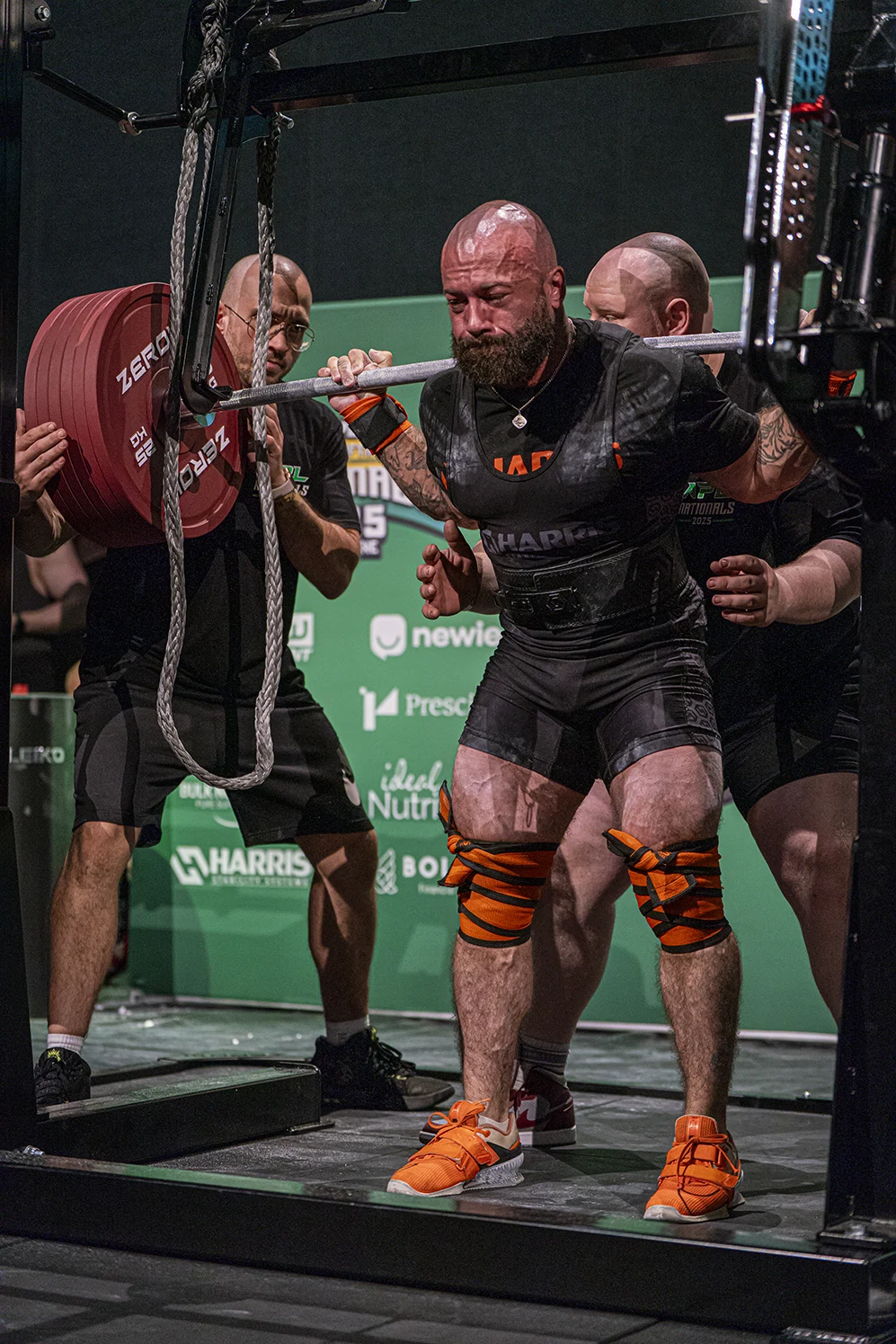
A soft belt is not automatically the best option for all lifting.
A rigid leather belt may make more sense during:
• Heavy squats
• Heavy deadlifts
• Low-repetition strength work
• Powerlifting competition preparation
• Maximum or near-maximum attempts
• Sessions where a very firm bracing surface is preferred
Rigid belts generally maintain their shape more effectively under pressure.
Many powerlifters prefer this firm feel because it remains consistent throughout heavy lifts.
The best comparison is not soft equals comfortable and rigid equals better. The real question is which construction suits the job being performed.
Soft Belt vs Lever Belt
Lever belts are rigid leather belts secured using a lever mechanism.
They are popular because they provide a consistent fit and can be opened quickly after a set.
|
Feature |
||
|---|---|---|
|
Flexibility |
High |
Low |
|
Tightness adjustment |
Quick and variable |
Fixed unless lever is moved |
|
Ease of opening |
Easy |
Very easy |
|
Ease of changing tightness |
Easy |
Less convenient |
|
Best for |
Varied training |
Heavy, consistent lifting |
|
Common use |
CrossFit, strongman and gym training |
Powerlifting and heavy strength work |
A soft belt may be better for changing exercises and training styles.
A lever belt may be better when the lifter wants the same tight fit for repeated heavy sets.
Soft Belt vs Prong Belt
Prong belts use one or two metal prongs and a series of holes.
They allow more adjustment than a lever belt but take longer to fasten.
|
Feature |
Soft Belt | |
|---|---|---|
|
Material |
Nylon or neoprene |
Leather |
|
Flexibility |
High |
Low |
|
Adjustment range |
Broad |
Based on hole spacing |
|
Fastening speed |
Fast |
Moderate |
|
Best for |
Mixed training |
Heavy strength training |
|
Comfort during movement |
Usually higher |
Depends on fit |
A prong belt may suit lifters who want a rigid belt with adjustable tightness.
A soft belt may suit lifters who prioritise speed, comfort and movement.
Nylon vs Neoprene Soft Belts
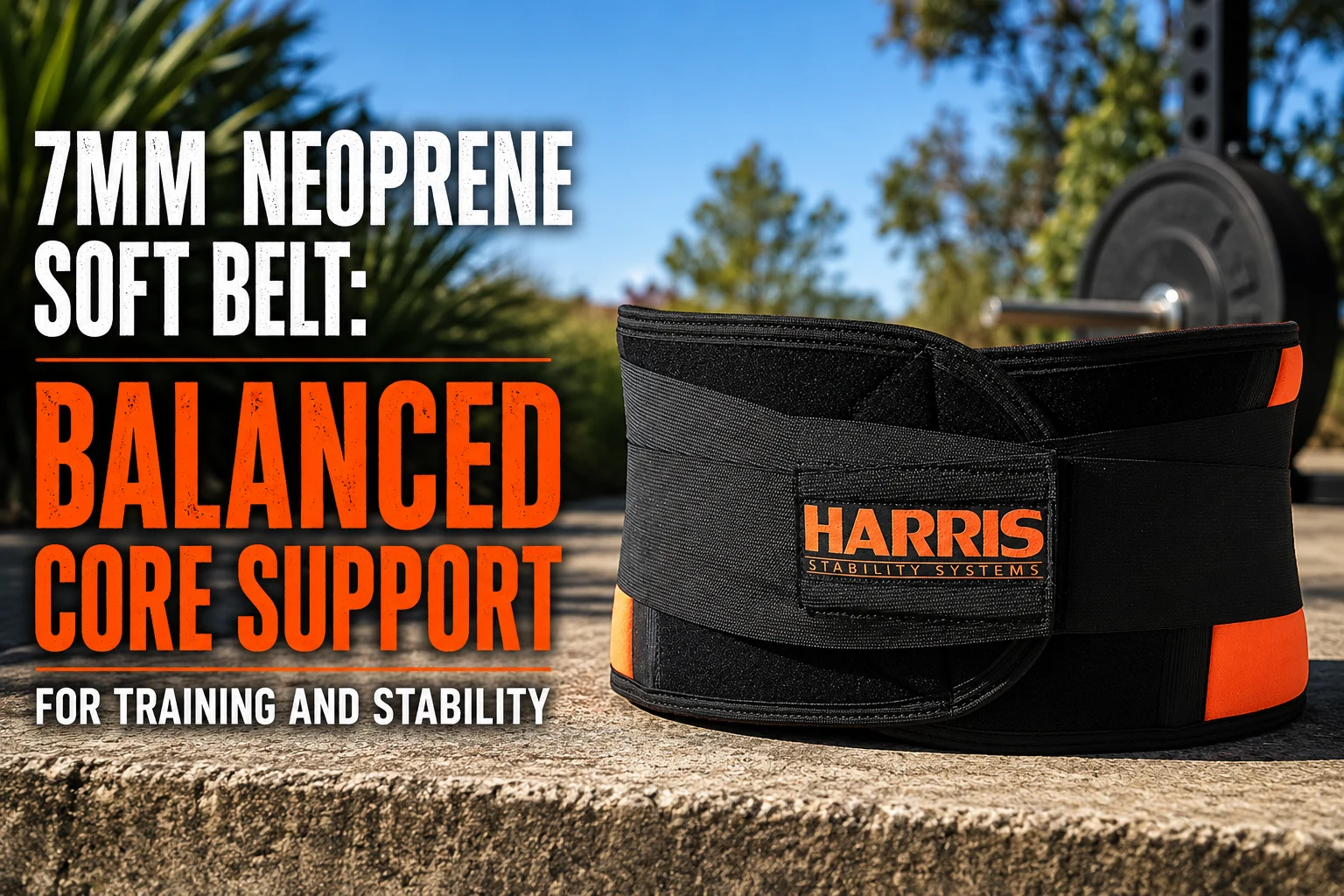
Soft lifting belts are commonly made from nylon, neoprene or a combination of materials.
Nylon Lifting Belts
Nylon belts are generally:
• Lightweight
• Flexible
• Easy to adjust
• Less padded than neoprene
• Suitable for varied training
• Quick to put on and remove
The Harris True Core Nylon Lifting Belt may suit lifters who want a practical belt for CrossFit, general strength work and mixed training sessions.
Neoprene Lifting Belts
Neoprene belts are generally:
• Soft against the torso
• More padded
• Flexible
• Thicker than basic nylon belts
• Comfortable across repeated movement
The Harris 7mm Neoprene Soft Belt may suit lifters who prefer additional cushioning and a more substantial soft-belt feel.
The best material depends on the fit, the belt's construction and the athlete's preference.
Can a Soft Belt Still Be Used for Heavy Lifting?
Yes. A soft belt can be used during heavy lifting if the lifter prefers its feel and it remains secure.
However, it will not feel the same as a thick leather belt.
A soft belt may be sufficient for:
• Heavy training sets
• Strongman events
• General deadlifting
• High-repetition squats
• Accessory work
• Athletes who dislike rigid belts
A lifter seeking the firmest possible bracing surface may prefer a rigid belt.
The load alone does not decide the belt. Personal preference and the type of movement also matter.
Can You Own Both a Soft and Rigid Belt?
Yes. Many lifters use more than one type of belt.
For example:
• A rigid belt for heavy squats and deadlifts
• A soft belt for conditioning and event training
• A lever belt for powerlifting sessions
• A neoprene belt for carries and loading work
Owning both allows the lifter to choose according to the session instead of forcing one belt into every type of training.
This can be especially useful for athletes who combine powerlifting, strongman, bodybuilding or functional fitness.
How Tight Should a Soft Lifting Belt Be?
A soft belt should be tight enough to remain in position and provide a surface to brace against.
It should not be so tight that it:
• Prevents normal breathing
• Causes numbness
• Creates sharp discomfort
• Slides out of position
• Interferes with the exercise
• Cannot be loosened easily
The lifter should still be able to expand the torso against the belt.
Wearing the belt loosely enough to move around the waist may make it less useful.
How Should a Soft Belt Fit?
A well-fitted soft belt should:
• Sit securely around the torso
• Avoid excessive contact with the ribs and hips
• Remain in place during movement
• Allow the lifter to breathe and brace
• Feel comfortable through the intended range of motion
• Fasten securely without relying on the very end of the closure
Always follow the product-specific sizing guide.
Do not choose a size based only on trouser size, as waist measurements and belt sizing methods can differ.
Common Mistakes When Choosing Between Soft and Rigid Belts
Assuming Rigid Is Always Better
A rigid belt may provide a firmer surface, but that does not make it ideal for every workout.
During conditioning, carries and high-volume training, flexibility may be more useful than maximum stiffness.
Buying a Soft Belt Only Because It Is Cheaper
Price should not be the only reason for choosing a soft belt.
The belt still needs to suit the training, fit correctly and fasten securely.
Using One Belt for Every Session
A belt that works well for heavy squats may not be comfortable during a strongman medley.
Choose according to the session rather than treating one belt as the only option.
Wearing a Soft Belt Too Loosely
A soft belt should still be fitted firmly.
If it shifts constantly or provides no clear surface to brace against, it may need to be tightened or resized.
Expecting the Belt to Fix Technique
Neither soft nor rigid belts correct:
• Poor bracing
• Weak setup
• Inconsistent bar path
• Unsuitable load selection
• Rushed repetitions
• Poor programming
A belt can complement good lifting habits, but it does not replace them.
Ignoring the Closure
The fastening system is one of the most important parts of a soft belt.
Check that it closes securely and suits the amount of adjustment required during training.
Choosing the Most Aggressive Option by Default
The thickest or stiffest belt is not automatically the right choice.
A belt should match the work performed most often.
How to Decide Which Belt You Need
Start with your main type of training.
A Soft Belt May Be Better If You:
• Perform CrossFit or functional fitness
• Complete mixed training sessions
• Change exercises frequently
• Perform strongman carries or loading events
• Use higher repetitions
• Prioritise comfort
• Want quick adjustment
• Dislike rigid leather belts
• Train for general strength or bodybuilding
A Rigid Belt May Be Better If You:
• Focus on heavy squats and deadlifts
• Train specifically for powerlifting
• Prefer a very firm bracing surface
• Perform low-repetition strength work
• Want consistent belt tension across heavy sets
• Are preparing for a competition that permits the belt
You May Benefit From Both If You:
• Combine powerlifting and strongman
• Perform static strength and conditioning
• Use different belts for different lifts
• Want flexibility across changing training blocks
• Compete in more than one strength sport
The better choice is the one that matches the majority of the work in front of you.
Frequently Asked Questions
Is a soft lifting belt better than a leather belt?
Not universally. A soft belt is usually more flexible and comfortable, while a leather belt provides a firmer feel. The better option depends on the training.
Are soft lifting belts good for CrossFit?
Yes. Their quick adjustment and flexibility can suit workouts involving multiple exercises and frequent movement.
Can you deadlift in a soft lifting belt?
Yes. Soft belts can be used for deadlifts, although some lifters prefer a rigid leather belt for heavy low-repetition work.
Can you squat in a soft lifting belt?
Yes. They are commonly used for general squatting, higher-repetition work and mixed training sessions.
Are soft belts good for strongman?
They can be useful during carries, loading events, medleys and conditioning work where a rigid belt may feel restrictive.
Are soft belts suitable for powerlifting?
They can be used in training, but competition rules and personal preference may make a rigid powerlifting belt more appropriate.
Is a nylon or neoprene belt better?
Nylon is generally lighter and less padded. Neoprene usually feels softer and more cushioned. The best choice depends on the lifter's preference.
Can beginners use soft lifting belts?
Yes, but they should still learn how to brace and lift without relying on a belt for every set.
How tight should a soft lifting belt be?
It should remain securely in place and provide a surface to brace against without preventing normal breathing or movement.
Can a soft belt be worn for an entire workout?
It may be comfortable enough to wear across a varied session, but it should be loosened or removed when it is not needed.
Do soft belts provide less support?
They provide a different feel rather than no support. They are more flexible and generally less rigid than leather belts.
Can I own both a soft belt and a rigid belt?
Yes. Many lifters use a rigid belt for heavy barbell work and a soft belt for conditioning, event training or higher-volume sessions.
Are soft lifting belts allowed in competition?
Rules vary by sport, federation and event. Always check the current equipment requirements before competing.
Final Thoughts
A soft lifting belt makes more sense than a rigid belt when flexibility, comfort and quick adjustment matter more than maximum stiffness.
It may be the better option for CrossFit, general gym training, bodybuilding, conditioning, strongman carries and sessions involving frequent exercise changes.
A rigid lever or prong belt may still be preferable for heavy squats, deadlifts and competition-specific powerlifting.
The Harris True Core Nylon Lifting Belt may suit lifters who want a lightweight, adaptable option for mixed training. The Harris 7mm Neoprene Soft Belt may better suit lifters who prefer a softer and more cushioned feel.
The right belt is not the one that appears most serious. It is the belt that fits properly, suits the session and remains practical across regular training.