
When to Use Lifting Straps | Powerlifting, Strongman & Back Training
Author: Harris Stability Systems Last Updated: 19 August 2026

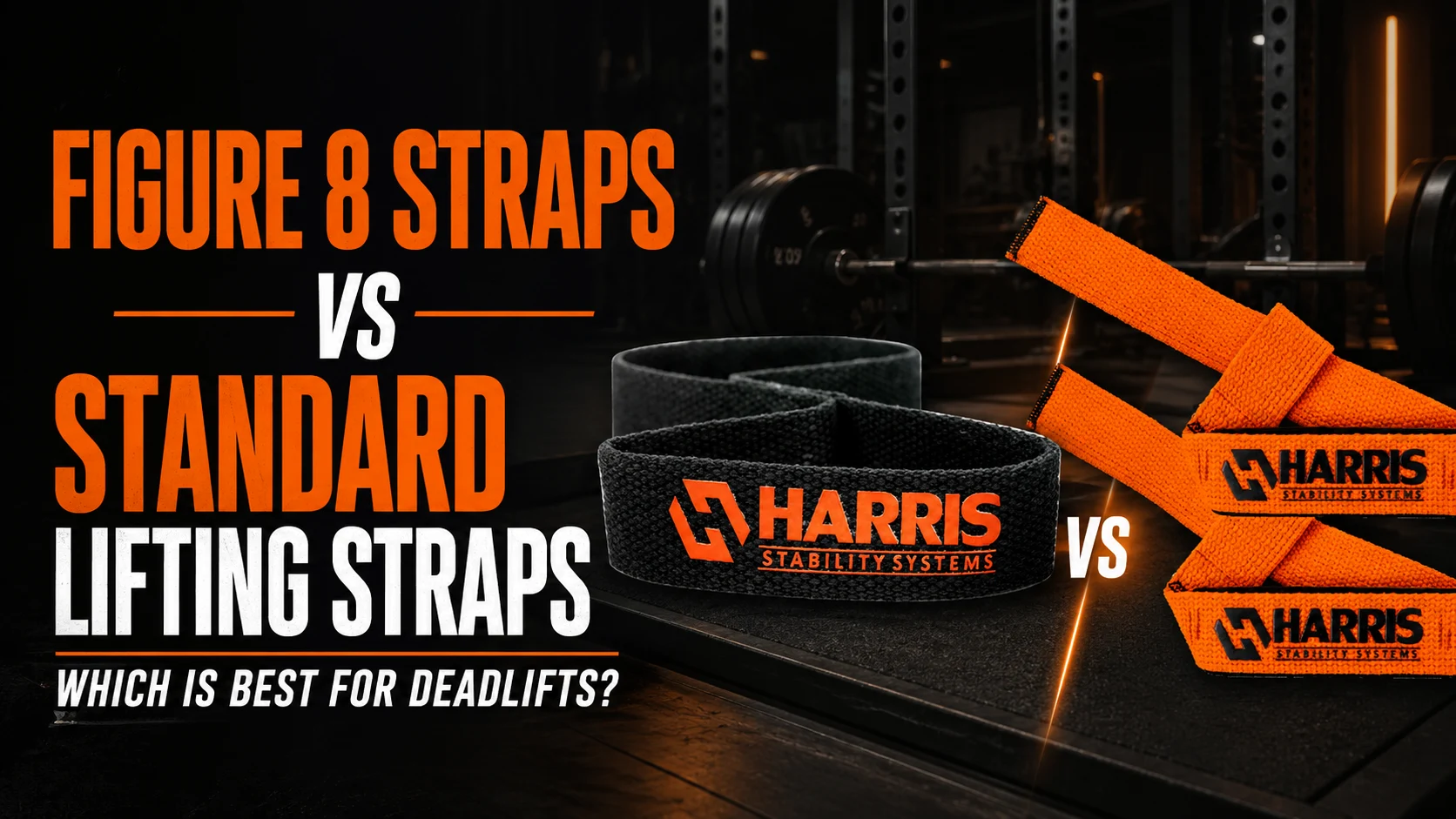
When Do Lifting Straps Help Most for Powerlifting, Strongman and High-Volume Back Training?
Lifting straps are most useful when grip fatigue would otherwise limit the amount of pulling work a lifter can complete.
They are commonly used for deadlifts, rows, pulldowns, shrugs and strongman events. By connecting the hands more securely to the bar or handle, straps reduce how much the lifter must rely on grip alone to hold the load.
This does not mean straps should be used for every pulling exercise. Powerlifters still need to practise competition-legal grip techniques, while strongman athletes need to follow the rules for each event. Lifters may also want to keep some unstrapped work in their program if grip strength is an important training goal.
This guide explains when lifting straps are most useful, when they may be unnecessary and how standard and figure 8 straps suit different types of training.
What Do Lifting Straps Do?
Lifting straps are lengths of material that connect the hands to a barbell, dumbbell or machine handle.
Their purpose is to reduce the chance that a set ends solely because the lifter can no longer hold the implement.
They are commonly used during:
• Deadlifts
• Romanian deadlifts
• Barbell rows
• Dumbbell rows
• Lat pulldowns
• Cable rows
• Shrugs
• Rack pulls
• Strongman deadlift events
• Thick-handle pulling exercises
Straps do not lift the weight for you. The lifter must still perform the exercise and control the load.
When Are Lifting Straps Most Useful?
Lifting straps are most practical when the target muscles can continue working but the hands are beginning to open or lose their hold.
This often happens during:
• Heavy pulling sessions
• High-repetition deadlifts
• Long back workouts
• Strongman events
• Thick-bar training
• Repeated pulling exercises
• Sessions performed after earlier grip-intensive work
The decision to use straps should come from the purpose of the set.
If the goal is to train grip, straps may be unnecessary. If the goal is to train the back, hamstrings or upper traps, straps may allow the set to continue without grip being the first limiting factor.
Lifting Straps for Powerlifting Training
Lifting straps are generally not allowed during powerlifting competition deadlifts, but they can still be useful in training.
Powerlifters may use straps during:
• Deadlift volume work
• Romanian deadlifts
• Block pulls
• Rack pulls
• Stiff-leg deadlifts
• Barbell rows
• Shrugs
• Back-off sets
• Assistance exercises
Straps may be especially practical when several heavy pulling exercises are programmed in the same week.
For example, a lifter may complete competition-style deadlifts without straps and then use straps for Romanian deadlifts or rows afterwards.
This keeps competition grip practice in the program while allowing later exercises to be trained without grip fatigue ending every set.
Should Powerlifters Deadlift With Straps?
Powerlifters can use straps in training, but not every deadlift set should automatically be strapped.
Unstrapped work may be important for practising:
• Double-overhand grip
• Hook grip
• Mixed grip
• Competition setup
• Grip strength under heavy loads
Straps may be more appropriate for:
• Higher-repetition sets
• Long volume sessions
• Assistance work
• Fatigue management
• Exercises performed after competition deadlifts
A practical approach is to use unstrapped sets when grip development or competition practice is part of the goal, then use straps when the primary objective shifts to training the posterior chain.
Lifting Straps for Deadlift Volume
Deadlift volume can create substantial fatigue in the hands and forearms.
Straps may be useful during:
• Sets of five or more repetitions
• Multiple back-off sets
• Tempo deadlifts
• Romanian deadlifts
• Stiff-leg deadlifts
• Snatch-grip deadlifts
• Deficit deadlifts
These exercises are often programmed to train the hamstrings, glutes, back or deadlift position rather than test how long the lifter can hold the bar.
Using straps can prevent the grip from ending the set before the programmed repetitions are completed.
Lifting Straps for Strongman
Lifting straps are widely used in strongman, although the permitted style depends on the event and competition rules.
They may be used during:
• Axle deadlifts
• Deadlift ladders
• Deadlift for repetitions
• Car deadlifts
• Frame deadlifts
• Silver dollar deadlifts
• Block pulls
• Thick-handle events
Strongman deadlift events often involve unusual bar diameters, high repetitions or extended time under load.
In these situations, straps can be an important part of the athlete’s event setup.
However, not every strongman event permits straps. Some may specify:
• Standard straps only
• Figure 8 straps
• No straps
• A particular wrapping method
• Equipment supplied by the organiser
Athletes should confirm the current event rules before competition.
Standard Straps for Strongman
Standard lifting straps wrap around the bar and rely on the lifter maintaining some grip around both the strap and the implement.
They may suit:
• General strongman training
• Axle pulls
• Accessory deadlifts
• Rows and shrugs
• Events where figure 8 straps are not allowed
• Lifters who want to release the bar more easily
Standard straps are versatile, but they can take longer to set up than figure 8 straps.
Figure 8 Straps for Strongman
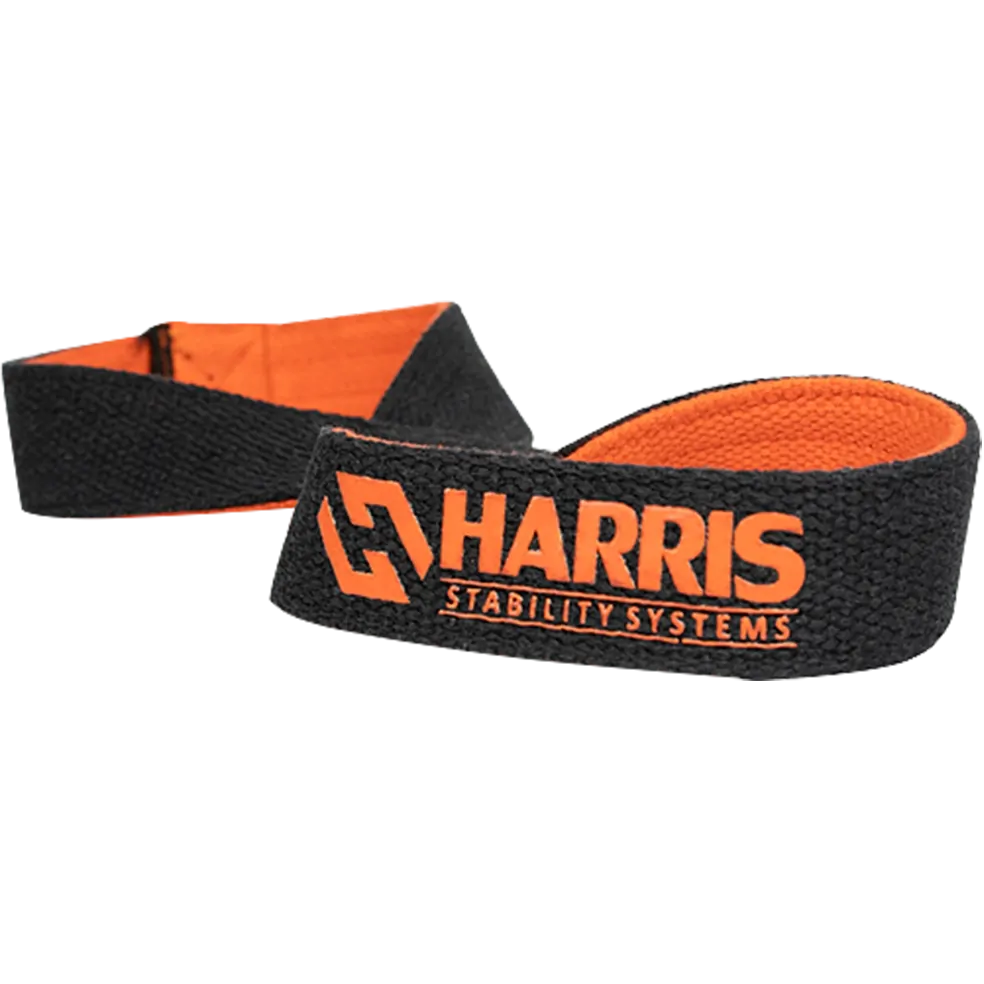
Figure 8 straps loop around the wrist and bar in a closed configuration.
They are commonly used for:
• Heavy strongman deadlifts
• Axle deadlifts
• Deadlift for repetitions
• Thick-bar pulling
• Events where maintaining attachment to the bar is the priority
Figure 8 straps create a more fixed connection to the bar than standard straps.
This makes them highly specialised.
Because the hand remains closely connected to the bar, lifters should understand how to release safely before using them with very heavy loads.
Lifting Straps for Thick-Handle Training
Thicker bars and handles are more difficult to hold than standard Olympic barbell sleeves.
Examples include:
• Axle bars
• Thick-grip dumbbells
• Fat-grip attachments
• Strongman handles
• Thick cable attachments
Straps may be useful when the purpose of the exercise is to train pulling strength rather than grip alone.
If grip training is the goal, the exercise should be performed without straps.
Lifting Straps for High-Volume Back Training
Back workouts often include several pulling exercises in one session.
A typical session may contain:
• Barbell rows
• Pulldowns
• Seated cable rows
• Dumbbell rows
• Machine rows
• Straight-arm pulldowns
• Shrugs
The hands and forearms may fatigue before the back muscles have completed the planned work.
Lifting straps may be useful during later sets or exercises, particularly when grip fatigue begins affecting the number of repetitions performed.
Lifting Straps for Rows
Rows are one of the most common exercises performed with straps.
They may be used during:
• Barbell rows
• Pendlay rows
• Chest-supported rows
• Dumbbell rows
• T-bar rows
• Cable rows
• Machine rows
Straps can be especially practical for higher-repetition rows where the lifter is trying to keep the hands attached to the handle through several working sets.
They do not correct rowing technique or guarantee that the back is being trained effectively. The lifter still needs to control the movement and use an appropriate load.
Lifting Straps for Lat Pulldowns
Straps may also be used on lat pulldown handles.
They can be useful when:
• Grip becomes tired from earlier exercises
• The session includes several pulldown variations
• Higher repetitions are programmed
• The handles are difficult to hold
• Forearm fatigue ends the set early
Standard lifting straps are usually more practical than figure 8 straps for pulldowns because they are easier to attach to different handles.
Lifting Straps for Shrugs
Shrugs are commonly performed with loads that are difficult to hold for multiple repetitions.
Straps may be useful during:
• Barbell shrugs
• Dumbbell shrugs
• Trap-bar shrugs
• Machine shrugs
• Behind-the-back shrugs
The target of the exercise is usually the upper back and trapezius muscles rather than grip endurance.
Using straps may allow the lifter to complete the planned shrug sets without constantly resetting the hands.
Lifting Straps for Romanian Deadlifts
Romanian deadlifts often involve long sets and sustained time holding the bar.
Straps may be useful because the exercise is generally programmed to train:
• Hamstrings
• Glutes
• Back position
• Hip-hinge strength
If grip fatigue ends the set first, the intended muscles may not receive the planned amount of work.
Many powerlifters and bodybuilders therefore use straps for Romanian deadlifts even when they perform their main deadlifts without them.
When Should You Avoid Lifting Straps?
Straps may be unnecessary when the purpose of the set is to train grip.
Examples include:
• Double-overhand deadlifts
• Timed bar holds
• Farmers carries
• Grip-specific rows
• Thick-bar holds
• Dead hangs
• Competition grip practice
They may also be unnecessary for light warm-up sets where the load is easy to hold.
Straps are a training option, not a requirement for every pulling movement.
Should You Use Straps on Every Set?
Most lifters do not need straps for every set.
A common approach is:
1. Perform warm-up sets without straps.
2. Complete competition-specific or grip-focused work without straps.
3. Add straps when grip begins limiting the intended exercise.
4. Use straps for later accessory work where grip is not the training priority.
This allows the hands and forearms to continue receiving direct work while still making straps available when needed.
Do Lifting Straps Weaken Your Grip?
Using straps does not automatically weaken grip.
However, relying on them for every pulling set may reduce how much direct grip work is performed.
Lifters who want to maintain or improve grip strength can include:
• Unstrapped warm-up sets
• Double-overhand deadlifts
• Bar holds
• Farmers carries
• Thick-handle work
• Grip-specific exercises
The goal is not to avoid straps completely. It is to keep some unstrapped work where grip development matters.
Standard Lifting Straps
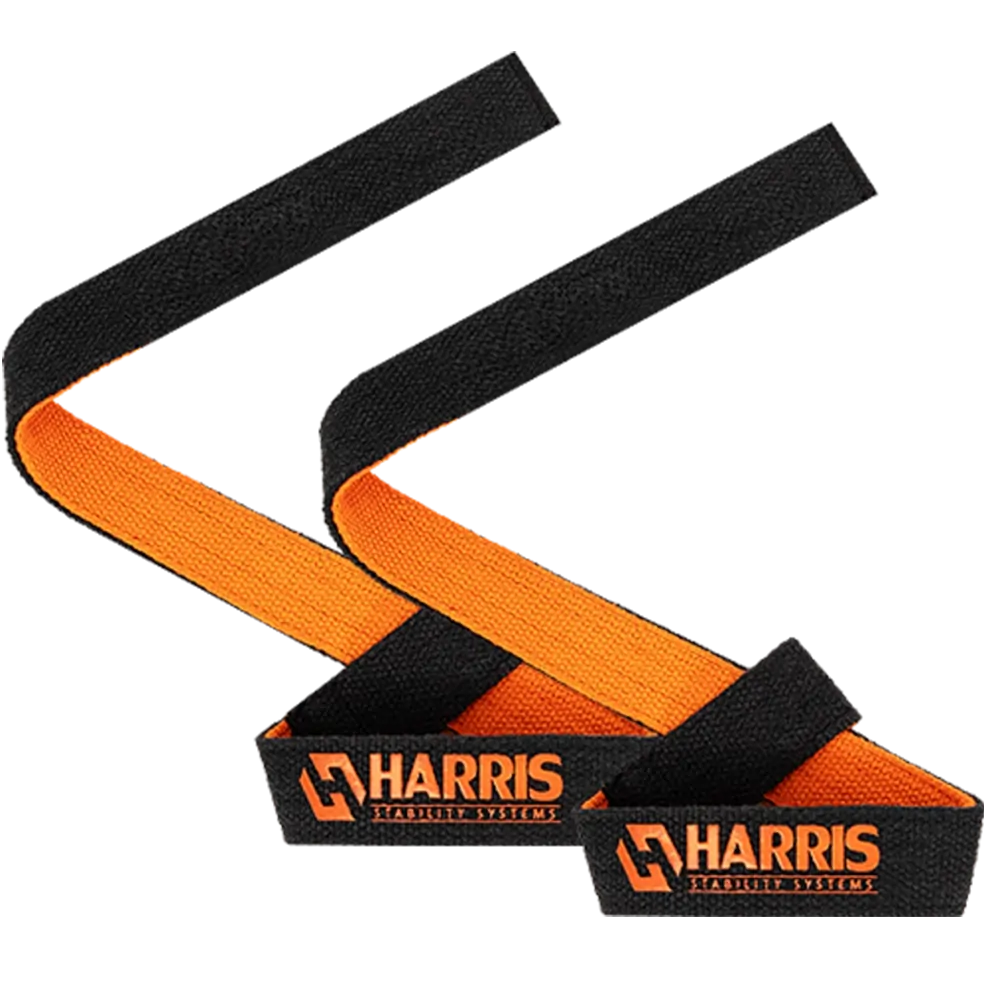
Standard straps use a loop around the wrist with a loose end that wraps around the bar or handle.
They are suitable for:
• Deadlifts
• Romanian deadlifts
• Rows
• Pulldowns
• Shrugs
• Machine exercises
• General gym training
Standard straps are usually the most versatile choice because they can be used with many different bars and handles.
Figure 8 Lifting Straps
Figure 8 straps consist of two connected loops.
One loop sits around the wrist, the strap passes underneath the bar and the other loop returns over the hand or wrist.
They are most commonly used for:
• Strongman deadlifts
• Axle deadlifts
• Heavy barbell pulls
• Deadlift for repetitions
• Thick-bar events
They create a more fixed connection than standard straps and are less versatile for cable machines, dumbbells and pulldown handles.
Standard Straps vs Figure 8 Straps
|
Feature |
Standard Straps |
Figure 8 Straps |
|---|---|---|
|
Construction |
Wrist loop with loose wrapping end |
Two connected loops |
|
Connection to bar |
Adjustable |
More fixed |
|
Setup |
Requires wrapping |
Loop around bar |
|
Ease of release |
Generally easier |
More restricted |
|
Rows and pulldowns |
Well suited |
Usually less practical |
|
Heavy strongman deadlifts |
Suitable |
Commonly preferred |
|
General gym use |
Highly versatile |
More specialised |
|
Thick bars |
Suitable depending on length |
Size must suit the bar |
Standard straps are usually the better all-round option.
Figure 8 straps are generally selected for specialised heavy pulling where a secure connection to the bar is the main priority.
Two-Ply Lifting Straps
Two-ply straps use two layers of material rather than one.
Depending on the product, this may create:
• A thicker strap
• A more substantial feel
• Greater material around the wrist
• Increased durability compared with lighter single-layer construction
The final feel depends on the material, stitching, width and overall design.
Two-ply construction does not automatically mean the strap is suitable for every exercise. The strap style and length still need to match the intended use.
Harris Lifting Straps Options
The Harris lifting strap range includes options for general gym training, powerlifting assistance work and strongman pulling.
2 Ply Heavy Duty Lifting Straps – 70cm
The 2 Ply Heavy Duty Lifting Straps – 70cm are standard-style straps designed for wrapping around barbells and handles.
They may suit:
• Deadlifts
• Romanian deadlifts
• Rows
• Pulldowns
• Shrugs
• General back training
• Strength assistance work
The longer strap design may allow additional wrapping around the bar, depending on the bar diameter and the lifter’s preferred setup.
2 Ply Figure 8 Heavy Duty Straps
The 2 Ply Figure 8 Heavy Duty Straps are intended for lifters who prefer a figure 8 connection.
They may suit:
• Strongman deadlifts
• Heavy barbell pulling
• Axle deadlifts
• Deadlift for repetitions
• Thick-handle training
Correct sizing is especially important with figure 8 straps because the loop needs to suit both the wrist and the diameter of the bar.
Figure 8 Lifting Straps
The Harris Figure 8 Lifting Straps provide another figure 8 option for heavy pulling sessions.
The appropriate model should be chosen according to:
• Wrist fit
• Bar diameter
• Strap construction
• Intended exercise
• Competition rules, where relevant
Lifting Straps Orange
The Harris Lifting Straps Orange are a standard lifting strap option for general pulling exercises.
They may suit lifters looking for straps for:
• Rows
• Pulldowns
• Deadlifts
• Romanian deadlifts
• Shrugs
• General gym training
How Long Should Lifting Straps Be?
Strap length affects how many times the material can wrap around the bar.
Longer straps may be useful for:
• Additional bar wraps
• Thicker bars
• Axle training
• Lifters who prefer more material around the handle
However, excessively long straps may take more time to set up and can leave loose material.
Shorter straps may be quicker to use but may not wrap sufficiently around thick bars.
The best length depends on the strap style, bar diameter and intended exercise.
How to Use Standard Lifting Straps
A general method is:
1. Feed the loose end through the wrist loop.
2. Place the strap around the wrist.
3. Position the loose end so it runs in line with the palm.
4. Place the hand over the bar.
5. Wrap the loose end underneath and around the bar.
6. Rotate the bar slightly to tighten the strap.
7. Grip the bar normally before beginning the set.
The strap should wrap in the opposite direction to the fingers so that the hand and strap tighten together around the bar.
How to Use Figure 8 Straps
A general method is:
1. Place one loop over the hand and around the wrist.
2. Pass the remaining loop underneath the bar.
3. Place the hand through the second loop.
4. Grip the bar.
5. Check that both loops sit securely before lifting.
Figure 8 straps should be practised with manageable loads before being used for maximum attempts.
Because they create a fixed connection, the lifter should understand how to release the bar safely.
How Tight Should Lifting Straps Be?
Straps should be tight enough to remain secure without cutting sharply into the wrists.
A suitable fit should:
• Keep the strap positioned around the wrist
• Avoid excessive loose material
• Allow the hand to close around the bar
• Avoid numbness or tingling
• Remain secure throughout the set
The strap should assist the grip without forcing the wrist into an awkward position.
Common Lifting Strap Mistakes
Using Straps Before Learning How to Grip the Bar
Beginners should still learn how to hold a bar correctly and perform basic pulling exercises without straps.
Using Straps for Every Warm-Up Set
Light sets often provide an opportunity to train grip before straps become necessary.
Wrapping Standard Straps in the Wrong Direction
If the strap wraps in the same direction as the fingers, it may loosen instead of tightening around the bar.
Leaving Too Much Material Loose
Loose strap material can interfere with setup or become trapped unevenly around the bar.
Choosing the Wrong Figure 8 Size
Figure 8 straps that are too small may not fit around both the wrist and bar.
Straps that are too large may create an excessively loose connection.
Expecting Straps to Correct Technique
Straps do not fix:
• Poor deadlift setup
• Incorrect rowing technique
• Unsuitable loads
• Rushed repetitions
• Weak bracing
• Poor exercise selection
These issues need to be addressed separately.
Ignoring Competition Rules
Powerlifting generally does not allow straps for the competition deadlift.
Strongman rules vary between events.
Always check the current rules before competing.
How to Choose the Right Lifting Straps
Choose Standard Straps If You:
• Want one versatile pair
• Perform rows and pulldowns
• Train bodybuilding or general strength
• Use several types of machines and handles
• Want an easier release from the bar
• Need straps for Romanian deadlifts and assistance work
Choose Figure 8 Straps If You:
• Train strongman deadlifts
• Pull on axle bars
• Perform heavy deadlift repetitions
• Want a more fixed connection
• Understand how to use and release them safely
• Have confirmed that they are permitted for the event
Choose Two-Ply Straps If You:
• Prefer thicker strap material
• Want a more substantial construction
• Regularly perform heavy pulling
• Need straps intended for repeated use
The correct choice depends on the exercise performed most often.
Frequently Asked Questions
When should I use lifting straps?
Use straps when grip fatigue would otherwise end a pulling set before the intended muscles have completed the planned work.
Are lifting straps useful for powerlifting?
They can be useful in powerlifting training for volume deadlifts, Romanian deadlifts, rows and accessory work. They are generally not allowed during competition deadlifts.
Are lifting straps useful for strongman?
Yes. They are commonly used in strongman deadlift events, although the permitted strap style depends on the event rules.
Should I use straps for back training?
They can be useful for rows, pulldowns and shrugs when the hands or forearms fatigue before the back.
Should I use straps on every deadlift set?
Not necessarily. Unstrapped sets may still be useful for competition practice and grip development.
Do lifting straps weaken grip?
Not automatically. However, lifters who always use straps may perform less direct grip work. Keeping some unstrapped exercises in the program can address this.
Are figure 8 straps better than standard straps?
Neither is universally better. Standard straps are more versatile, while figure 8 straps are more specialised for heavy pulling and strongman.
Can you use lifting straps for Romanian deadlifts?
Yes. They are commonly used because Romanian deadlifts often involve higher repetitions and long periods holding the bar.
Can you use lifting straps for lat pulldowns?
Yes. Standard straps can be wrapped around many pulldown handles.
Can beginners use lifting straps?
Yes, but beginners should also learn how to grip the bar and perform pulling exercises without depending on straps for every set.
How tight should lifting straps be?
They should sit securely without causing numbness, tingling or sharp pressure around the wrists.
Are lifting straps allowed in powerlifting competitions?
They are generally not allowed for competition deadlifts. Check the current federation rulebook.
Are figure 8 straps allowed in strongman?
They are allowed in some events but not all. Check the specific competition rules.
Final Thoughts
Lifting straps are most useful when grip fatigue would otherwise limit deadlift volume, strongman pulling or high-volume back training.
Powerlifters may use straps for assistance exercises and volume work while keeping competition deadlifts unstrapped. Strongman athletes may prefer figure 8 straps for heavy deadlift events, while bodybuilders and general gym lifters often benefit from standard straps for rows, pulldowns and shrugs.
The Harris 2 Ply Heavy Duty Lifting Straps – 70cm may suit lifters looking for a versatile standard strap for deadlifts and back training.
The 2 Ply Figure 8 Heavy Duty Straps and Figure 8 Lifting Straps may better suit strongman athletes and heavy pullers who want a more fixed connection to the bar.
The best approach is to keep some direct grip work in the program and use straps when grip is not the main purpose of the exercise.