
Weightlifting Straps Australia | Deadlift & Figure 8 Strap Guide
Author: Harris Stability Systems Last Updated: 17 September 2026

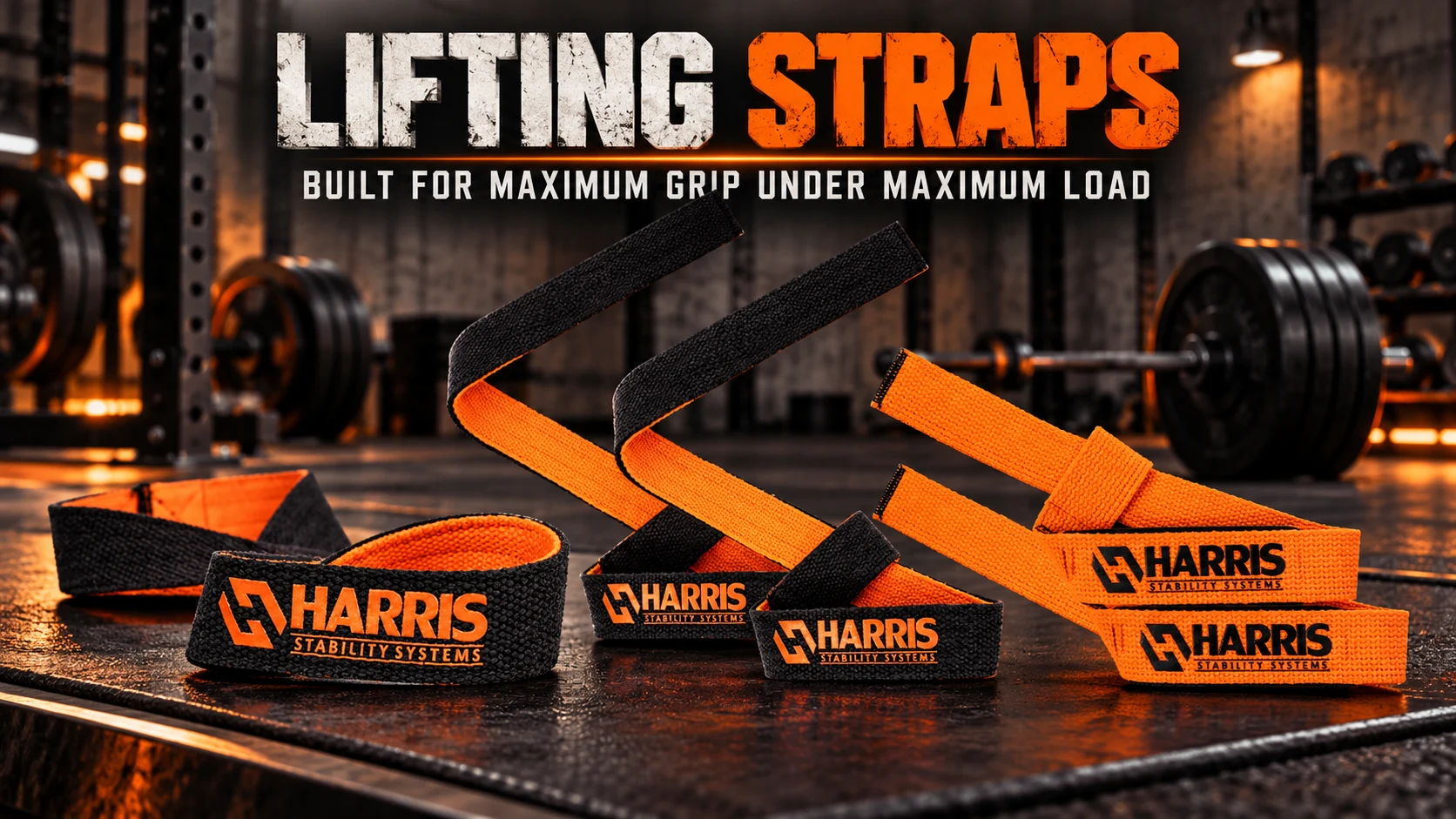
Weightlifting Straps: A Complete Guide to Choosing and Using Lifting Straps
When Grip Gives Out Before the Target Muscles
During deadlifts, rows, shrugs and other pulling exercises, grip can sometimes fatigue before the back, legs or shoulders have completed the intended work.
Weightlifting straps help create a more secure connection between your hands and the bar. This can allow you to continue training the target muscles when grip is the main limitation.
They are not required for every lifter or every set. Used selectively, however, lifting straps can be a practical addition to strength training, bodybuilding, powerlifting and strongman sessions.
This guide explains how lifting straps work, the main strap styles available and how to choose the right option for your training.
What Are Weightlifting Straps?
Weightlifting straps are training accessories worn around the wrists and connected to a barbell, dumbbell or exercise handle.
They reduce how much gripping effort is required to hold the load during pulling exercises.
You may also see them described as:
• Lifting straps.
• Gym straps.
• Deadlift straps.
• Wrist lifting straps.
• Weight straps.
• Grip straps.
These terms usually refer to the same general category of training accessory.
Weightlifting straps should not be confused with wrist wraps. Straps connect the hands to the weight during pulling movements, while wrist wraps provide support around the wrist during pressing and other heavy lifts.
How Do Lifting Straps Work?
Standard lifting straps wrap around both the wrist and the bar.
Once tension is applied, the strap helps secure the bar within the hand. This reduces the chance of the fingers opening or the bar rolling towards the fingertips during the set.
Figure 8 straps work differently. They loop around both the wrist and bar, creating a more secure connection with less need to manually wrap a long tail around the bar.
The amount of assistance depends on:
• Strap style.
• Correct setup.
• Strap length.
• Material and construction.
• Bar thickness.
• Hand position.
• Exercise selection.
Straps assist your hold, but they do not lift the weight or replace correct technique.
When Are Weightlifting Straps Useful?
Lifting straps are most useful when grip is preventing the target muscles from completing the intended workload.
Common examples include:
• The bar slipping during deadlifts.
• Forearms fatiguing early during rows.
• Grip limiting Romanian deadlift repetitions.
• Hands tiring during high-volume pulling sessions.
• Grip fatigue affecting later exercises.
• Heavy shrugs becoming difficult to hold.
• Strongman pulling events requiring a secure connection.
The goal is not simply to use more weight. The goal is to stop grip fatigue from changing the purpose of the exercise.
Exercises Commonly Performed With Lifting Straps
Lifting straps are typically used for pulling exercises such as:
• Conventional deadlifts.
• Sumo deadlifts.
• Romanian deadlifts.
• Stiff-leg deadlifts.
• Barbell rows.
• Dumbbell rows.
• Pulldowns.
• Shrugs.
• Rack pulls.
• Block pulls.
• Cable rows.
• Strongman pulling events.
They are generally unnecessary for pressing exercises such as the bench press or overhead press.
Types of Weightlifting Straps
Harris offers several lifting strap styles, including standard lifting straps and figure 8 straps.
Each type provides a different balance of adjustability, convenience and security.
Standard Lifting Straps
Standard straps use a wrist loop with a longer section that wraps around the bar.
They are one of the most versatile strap styles and can be used across many gym exercises.
Standard lifting straps may suit:
• Rows.
• Romanian deadlifts.
• Shrugs.
• Pulldowns.
• General back training.
• Bodybuilding sessions.
• Moderate and heavy pulling work.
They allow the user to adjust how tightly the strap is wrapped around the bar.
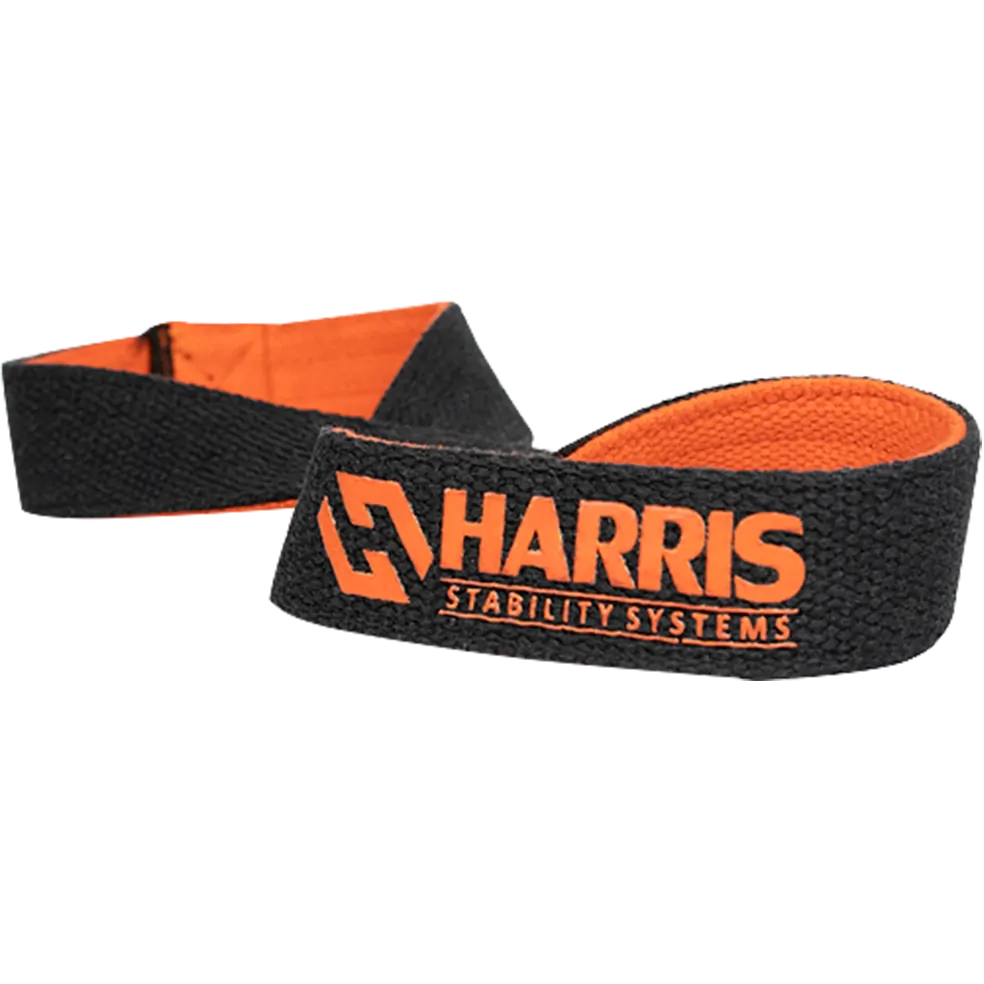
Harris options shown in the range include:
• 2 Ply Heavy Duty Lifting Straps – 70cm.
Advantages of Standard Lifting Straps
• Suitable for a wide range of exercises.
• Adjustable around the bar.
• Easy to loosen between repetitions.
• Useful for both barbells and dumbbells.
• A practical first strap for many lifters.
• Compact and easy to carry.
Possible Limitations
Standard straps require more setup than figure 8 straps.
It can also take several sessions to become comfortable wrapping both hands evenly, particularly when setting the second hand.
Figure 8 Lifting Straps
Figure 8 straps use two connected loops.
One loop sits around the wrist, the strap passes underneath the bar and the second loop is placed over the same wrist. This creates a highly secure connection between the lifter and the bar.
Harris figure 8 options shown in the range include:
• 2 Ply Figure 8 Heavy Duty Straps.
Figure 8 straps are commonly used for:
• Heavy deadlifts.
• Rack pulls.
• Block pulls.
• Strongman training.
• High-load pulling exercises.
• Situations where maximum bar security is preferred.
Advantages of Figure 8 Straps
• Very secure connection to the bar.
• Less repeated wrapping than standard straps.
• Useful for heavy pulling work.
• Popular in strongman and heavy deadlift training.
• Can reduce the need to maintain a tight hand grip throughout the set.
Possible Limitations
Figure 8 straps do not release from the bar as quickly as standard straps.
Because the connection is highly secure, lifters should use suitable safety practices and become familiar with the setup before attempting demanding weights.
Sizing can also be more important because the loop must suit both the wrist and the bar.
Standard Straps vs Figure 8 Straps
|
Bar connection |
Wrapped manually |
Looped around wrist and bar |
|
Adjustability |
High |
More fixed |
|
Ease of release |
Faster |
Slower |
|
Exercise versatility |
Very high |
More specialised |
|
Typical use |
Rows, RDLs, shrugs and general pulling |
Heavy deadlifts, rack pulls and strongman |
|
Setup |
Requires wrapping |
Simple once familiar |
|
Security |
Strong |
Very strong |
|
Best suited to |
General gym and strength training |
Heavy pulling specialists |
Neither style is automatically better.
The right choice depends on how you train and how secure you want the connection to feel.
Which Lifting Straps Should You Choose?
Choose Standard Lifting Straps If You:
• Want one strap for several exercises.
• Perform rows, shrugs and Romanian deadlifts.
• Prefer an adjustable wrap.
• Want to release the bar quickly.
• Are buying your first pair of straps.
• Want an option for general gym training.
Choose Figure 8 Straps If You:
• Perform very heavy deadlifts or rack pulls.
• Train for strongman.
• Want a highly secure connection.
• Prefer not to repeatedly wrap a long strap around the bar.
• Already understand how straps fit into your training.
• Need a more specialised pulling accessory.
Single-Ply vs Two-Ply Straps
Some lifting straps use a single layer of material, while heavy-duty models may use two layers.
A two-ply design generally creates a thicker and more substantial strap.
This may suit lifters who want:
• A heavier-duty construction.
• More material around the wrist or bar.
• Straps intended for demanding pulling sessions.
• A more robust feel.
However, thicker does not automatically mean better for every exercise.
Some lifters prefer a simpler, lighter strap for rows and bodybuilding work because it can be easier to adjust around different bars and handles.
Choose according to your training rather than selecting the thickest option by default.
Do Lifting Straps Improve Grip Strength?
Lifting straps do not directly strengthen your grip.
Their purpose is to reduce how much grip effort is needed during a particular exercise.
Grip strength is developed by training the hands and forearms through activities such as:
• Strapless deadlifts.
• Static barbell holds.
• Farmer’s carries.
• Pull-ups.
• Bar hangs.
• Pinch-grip exercises.
• Thick-bar training.
• Dedicated forearm work.
You can use straps and still develop grip strength. The key is keeping some strapless pulling or direct grip work in your program.
Will Lifting Straps Make Your Grip Weaker?
Using straps does not automatically weaken grip.
Problems may arise when a lifter uses straps for every pulling set and removes all other grip training.
A balanced approach could include:
• Strapless warm-up sets.
• Strapless competition-specific deadlifts.
• Straps for heavier volume work.
• Direct grip exercises elsewhere in the program.
• Regular assessment of grip strength.
This allows straps to support your back and posterior-chain training without ignoring the hands and forearms.
Lifting Straps vs Chalk
Lifting straps and chalk solve different problems.
Chalk improves friction between the hands and the bar. It is useful when grip is affected by sweat, humidity or a smooth surface.
Straps reduce how much gripping effort is required.
|
Grip problem |
Better starting option |
|---|---|
|
Sweaty or slippery hands |
Chalk |
|
Bar rolling despite adequate strength |
Chalk or straps |
|
Fingers opening because of fatigue |
Straps |
|
Grip limiting high-volume rows |
Straps |
|
Grip training is the session goal |
Neither |
|
Gym does not permit loose chalk |
Liquid chalk, where allowed |
Some lifters use both chalk and straps during heavy pulling sessions.
Always check the rules of your gym or competition.
Lifting Straps vs Mixed Grip
A mixed grip uses one palm facing the body and the other facing away during a deadlift.
This can make the bar more difficult to roll from the hands, but it places the arms in different positions.
Straps allow both hands to remain in the same orientation while reducing grip demand.
Powerlifters should remember that straps are generally not permitted during standard competition deadlifts. Competition grip should still be practised during appropriate training sessions.
Straps are most useful for:
• Volume work.
• Accessory deadlifts.
• Rows.
• Romanian deadlifts.
• Overload pulling.
• Strongman events where straps are permitted.
How to Use Standard Lifting Straps
Step 1: Put Your Hand Through the Loop
Place the hand through the wrist loop so the long strap section runs in line with the palm.
Step 2: Adjust the Wrist Loop
Tighten the loop so it sits securely without causing excessive discomfort.
Step 3: Wrap the Strap Around the Bar
Wrap the loose end around the bar in the direction that tightens when you close your hand.
Step 4: Remove Excess Slack
Rotate your hand around the bar until the strap feels secure.
Step 5: Grip the Bar Normally
Close your hand around the bar and maintain your usual lifting setup.
Avoid wrapping so much material around the bar that it creates an awkward or excessively thick grip.
Step 1: Place Your Hand Through the First Loop
Slide one hand through one side of the figure 8 strap.
Step 2: Pass the Strap Under the Bar
Allow the centre section of the strap to travel underneath the bar.
Step 3: Place Your Hand Through the Second Loop
Put the same hand through the remaining loop.
Step 4: Grip the Bar
Close your hand around the bar and remove unnecessary slack.
Step 5: Check the Fit
Make sure both straps feel even before beginning the set.
Practise the setup with a light load before using figure 8 straps for heavy work.
When Should You Put Straps On?
You do not need to use straps from the first warm-up set.
A practical approach is to:
1. Complete lighter warm-ups without straps.
2. Assess whether grip is becoming the main limitation.
3. Add straps for demanding working sets.
4. Keep selected strapless work in the program.
5. Use direct grip training where appropriate.
This keeps grip involved while allowing the target muscles to receive the planned training volume.
Are Lifting Straps Suitable for Beginners?
Beginners can use lifting straps, but they should first learn:
• How to grip the bar correctly.
• How to position the wrists.
• How to perform the exercise safely.
• How to identify whether grip is actually limiting the set.
• How to release the bar when necessary.
New lifters often benefit from a versatile standard strap before moving to a more specialised figure 8 design.
However, the best choice still depends on the exercises being performed.
Common Lifting Strap Mistakes
Using Straps for Every Set
This can remove useful grip training from the program.
Keep some appropriate sets strapless.
Wrapping the Strap in the Wrong Direction
The strap should tighten when the hand closes around the bar.
If it loosens during the set, recheck the direction.
Leaving Too Much Slack
Excess slack can make the bar feel unstable.
Tighten the setup evenly before lifting.
Overtightening Around the Wrist
The strap should be secure, but it should not be tightened to the point of unnecessary pain or numbness.
Using Figure 8 Straps Without Practising
The more secure connection changes how quickly you can separate from the bar.
Learn the setup with light weights first.
Ignoring Worn Material or Stitching
Inspect the straps regularly.
Replace them if the webbing, loops or stitching show significant damage.
Using Straps to Hide Poor Technique
Straps cannot correct an inefficient start position, rushed setup or uncontrolled bar path.
They should support a well-performed exercise.
How to Care for Lifting Straps
Follow the care instructions supplied with the product.
General care may include:
• Allowing straps to air dry after training.
• Avoiding prolonged damp storage.
• Keeping them away from excessive heat.
• Removing heavy chalk build-up where appropriate.
• Inspecting the stitching regularly.
• Storing them clean and dry.
• Replacing damaged straps.
Do not use straps that appear likely to tear under load.
Frequently Asked Questions
What are weightlifting straps used for?
They help secure the hands to the bar during pulling exercises when grip is the limiting factor.
Are lifting straps good for deadlifts?
Yes. They can be useful during deadlift volume, accessory work and heavy training sets. Powerlifters should still practise the grip required in competition.
Are figure 8 straps better than standard straps?
They provide a more secure connection, but they are also more specialised. Standard straps are usually more versatile across different gym exercises.
Can I use lifting straps for rows?
Yes. They are commonly used when forearm fatigue prevents the back from completing the intended workload.
Should I use straps or chalk?
Use chalk when friction is the main issue. Use straps when the hands and forearms are fatiguing before the target muscles. Some lifters use both.
Do lifting straps weaken grip?
Not automatically. Grip may be neglected if straps replace all strapless pulling and direct grip training.
Can I use straps in a powerlifting competition?
Straps are generally not used for standard competition deadlifts. Always check the current rules of your federation.
Are figure 8 straps suitable for strongman?
Yes. Figure 8 straps are commonly associated with heavy strongman pulling events, but event rules should always be checked.
How tight should lifting straps be?
They should feel secure enough to support the hold without creating excessive discomfort or numbness.
Which Harris straps are best for beginners?
A standard adjustable lifting strap is often the most versatile starting option. Figure 8 straps may suit lifters focused on heavy deadlifts or strongman training.
Choosing From the Harris Lifting Strap Range
The Harris range shown includes:
• Lifting Straps Orange for versatile pulling work.
• 2 Ply Heavy Duty Lifting Straps – 70cm for lifters wanting a longer, heavy-duty standard strap.
• Figure 8 Lifting Straps for a secure figure 8 setup.
• 2 Ply Figure 8 Heavy Duty Straps for demanding heavy pulling sessions.
The right option depends on:
• Your preferred strap style.
• The exercises you perform.
• How secure you want the connection to feel.
• Whether you prioritise versatility or heavy-duty pulling.
• Your wrist and hand fit.
• Your experience using straps.
Check the current product descriptions and sizing information before purchasing.
Final Thoughts
Weightlifting straps are useful when grip fatigue prevents the back, legs or shoulders from completing the intended work.
Standard lifting straps offer broad versatility for deadlifts, rows, Romanian deadlifts and shrugs. Figure 8 straps create a more secure connection suited to heavy deadlifts, rack pulls and strongman training.
Neither option replaces grip development or good technique.
The most effective approach is to use straps selectively, retain suitable strapless work and choose a design that matches the exercises you actually perform.