
7mm Neopreene Soft Belt: Balanced Core Support for Training and Stability


Modern training routines now rely heavily on core support equipment for success. Athletes and fitness enthusiasts often look for gear that provides stability with a greater range of motion. The 7mm Neopreene Soft Belt is made to provide structured unrestrictive support when exercising or taking part in other physical activity. The thickness chosen and material selection provide a balance between comfort and control.
People usually use Neoprene belts for the support of the lower back and abdomen. Soft belts do not restrict movement, unlike rigid belts, but still provide compression. Many training methods are suitable for this type of equipment.
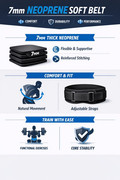
Performance depends significantly on the 7mm thickness. It provides significant support without excess weight. Users can focus and maintain posture while working out.
In this article, we will look at the purpose and design features, comparisons, and selection of 7mm neoprene soft belt. This helps the stakeholders in making sound decisions regarding the core support equipment.
Understanding the 7mm Neopreene Soft Belt and Its Role
The soft belt, made of 7mm neoprene, is designed to support the core and lower back during movement. It utilizes compression instead of a fixed structure. This promotes stability and flexibility.
Core stability is important for safe and efficient movement. During lifting or dynamic actions, the core helps with force transference and alignment. Enhance body awareness with a supporting belt.
Neoprene material provides warmth and compression. These properties enable muscles to remain active. You will feel comfortable.
A belt isn’t a replacement for technique. Rather, it aids in the controlled movement and positioning of the body. When used correctly, enhances training efforts
7mm Neoprene Soft Belt vs Rigid Support Belts:
|
Feature |
7mm Neoprene Soft Belt |
Rigid Support Belts |
|
Flexibility |
High and adaptive |
Limited movement |
|
Comfort Level |
Soft and wearable |
Firm and restrictive |
|
Core Engagement |
Encourages activation |
Can reduce engagement |
|
Use Duration |
Suitable for longer wear |
Short, heavy sessions |
This comparison highlights why soft belts are often chosen for functional training.
Design Features and Functional Benefits
The 7mm neoprene soft belt focuses on comfort, durability, and performance in its design. Every element helps to train under regulated manner.
Material Composition and Thickness
The flexibility and recovery of neoprene are well-known. It fits a body shape whilst keeping its shape. This offers uniform pressure distribution throughout the core.
Provides adequate support with 7mm thickness. The material is thick enough to stabilize but thin enough to avoid stiffness. This balance allows different movement types.
The stitching is built to last. The belt remains shaped after repeated use. Increased reliability enhances consistent training process.
Comfort, Fit, and Movement Support
A soft belt allows one to bend and rotate naturally. It's vital to perform functional exercises. Users are free to move at will.
Use adjustable closure systems for fit. A nice fit to prevent movement whilst active. Stability makes me feel safe during workouts.
All of these features make the belt adaptable. It helps you train without being distracting.
7mm Neopreene Soft Belt Compared to Other Core Support Options
The equipment that offers core support can include wraps, and heavy lifting belt. Using similar options helps understand what is most suited for any purpose.
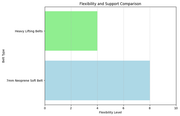
- The graph illustrates how neoprene belts aim for flexibility. Heavy-duty belts emphasize stiffness and load support.
- Soft belts are often preferred for dynamic or endurance training. Maximal lifts are suited to heavy belts. Those all have a purpose.
- Realizing such differences will help users choose the right equipment. Get the belt that works best for you.
How to Choose the Right Neoprene Soft Belt
The choice of belt depends on the goals of one’s training. Considered choices boost efficacy.
Think About the Type of Activity Flexible support enhances functional and endurance workouts. Soft belts meet these requirements well.
Fit has importance too. A belt should feel snug without causing you to pant Correct sizing enhances comfort and performance.
Quality of material should not be neglected. High-quality neoprene retains its shape and elasticity. This facilitates constant support.
Practical Selection Tips
- Choose 7mm thickness for balanced support
- Ensure adjustable fit for comfort
- Look for durable stitching and materials
- Match belt use to training intensity
These tips help users select a belt that supports their routines effectively.
Conclusion: Why the 7mm Neopreene Soft Belt Is a Practical Choice
The 7mm neoprene soft belt is a good balance of core support. It combines flexibility and stability without the stiffness. This feature makes it appropriate for all types of training.
We discussed all about the 7mm Neopreene Soft Belt, its use, design features, comparison and selection in this guide. Each section highlighted its importance in regulated and guided training.
Soft belts promote awareness of body posture. Harris Stability Systems They help you move rather than restrict you. Today’s functional training logic aligns well with this approach.
Soft belt is neoprene with 7mm core support. This is a good option for someone looking for something supportive that moves. With the right choice and fit this can be a useful part of a balanced training set up.