Liquid Chalk vs Block Chalk Australia | Gym Chalk Guide
Author: Harris Stability Systems Last Updated: 29 August 2026

Liquid Chalk vs Block Chalk – Which Should You Choose? (Australia)
The Complete Guide to Choosing the Right Gym Chalk
Whether you're deadlifting a new personal best, climbing, performing CrossFit workouts or tackling a heavy strongman event, one thing can quickly ruin a great lift—losing your grip.
That's where gym chalk comes in.
Chalk has been used by strength athletes for decades to absorb moisture, improve grip and help maintain control of the barbell throughout a lift.
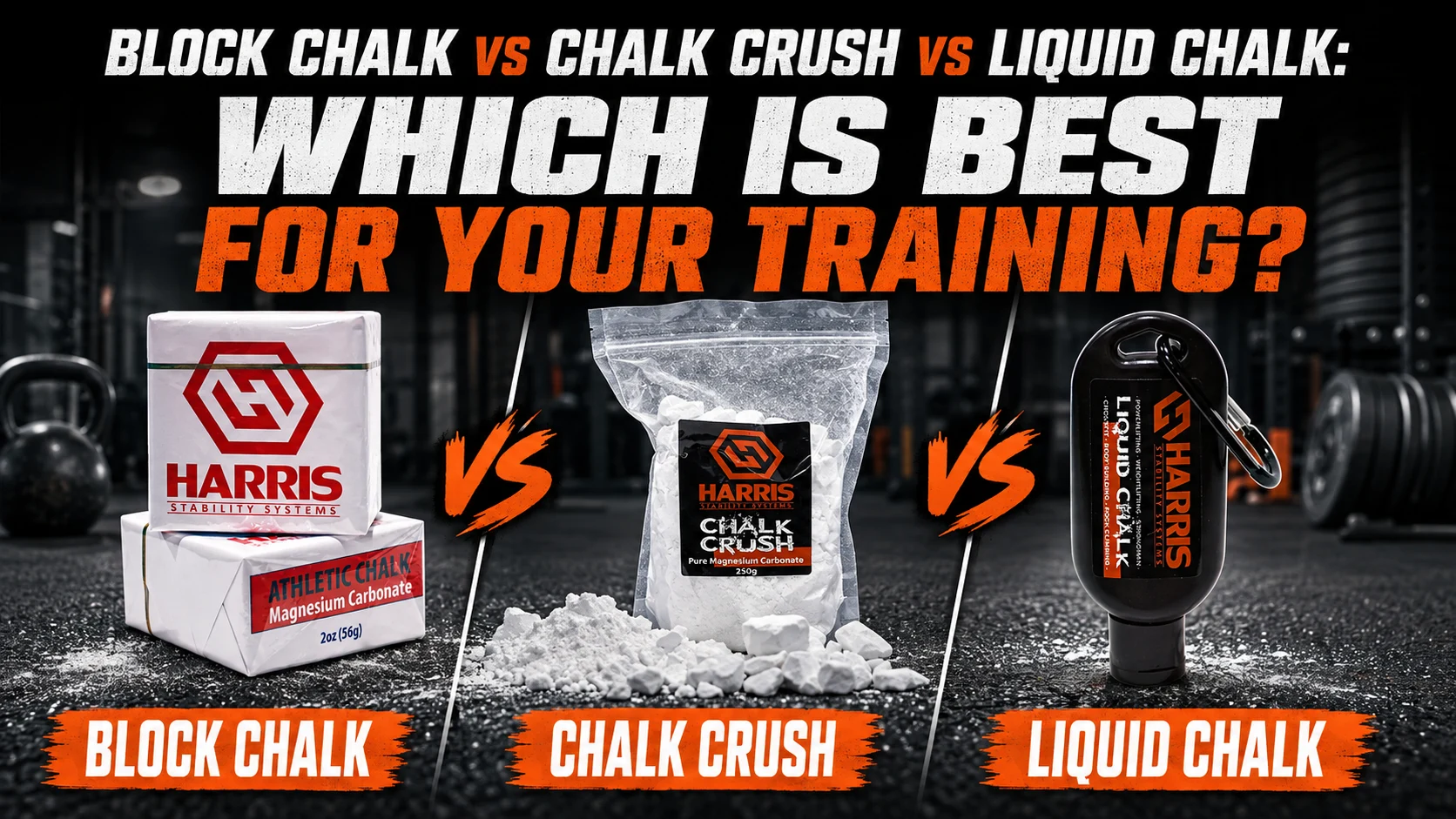
Today, athletes can choose from traditional block chalk, liquid chalk and even loose crushed chalk.
At Harris Stability Systems, we've developed a range of chalk products to suit every style of training. This guide explains the differences and helps you choose the right option for your workouts.
Why Use Gym Chalk?
Sweaty hands reduce friction between your hands and the bar.
Whether you're deadlifting, performing pull-ups or carrying heavy implements, reduced grip can mean the difference between completing a lift or losing control of the bar.
Gym chalk helps by:
-
Absorbing moisture.
-
Increasing grip.
-
Reducing hand slippage.
-
Improving confidence during heavy lifts.
-
Helping maintain consistent performance throughout your training session.
For many lifters, chalk is one of the simplest and most effective performance aids available.
What Is Liquid Chalk?
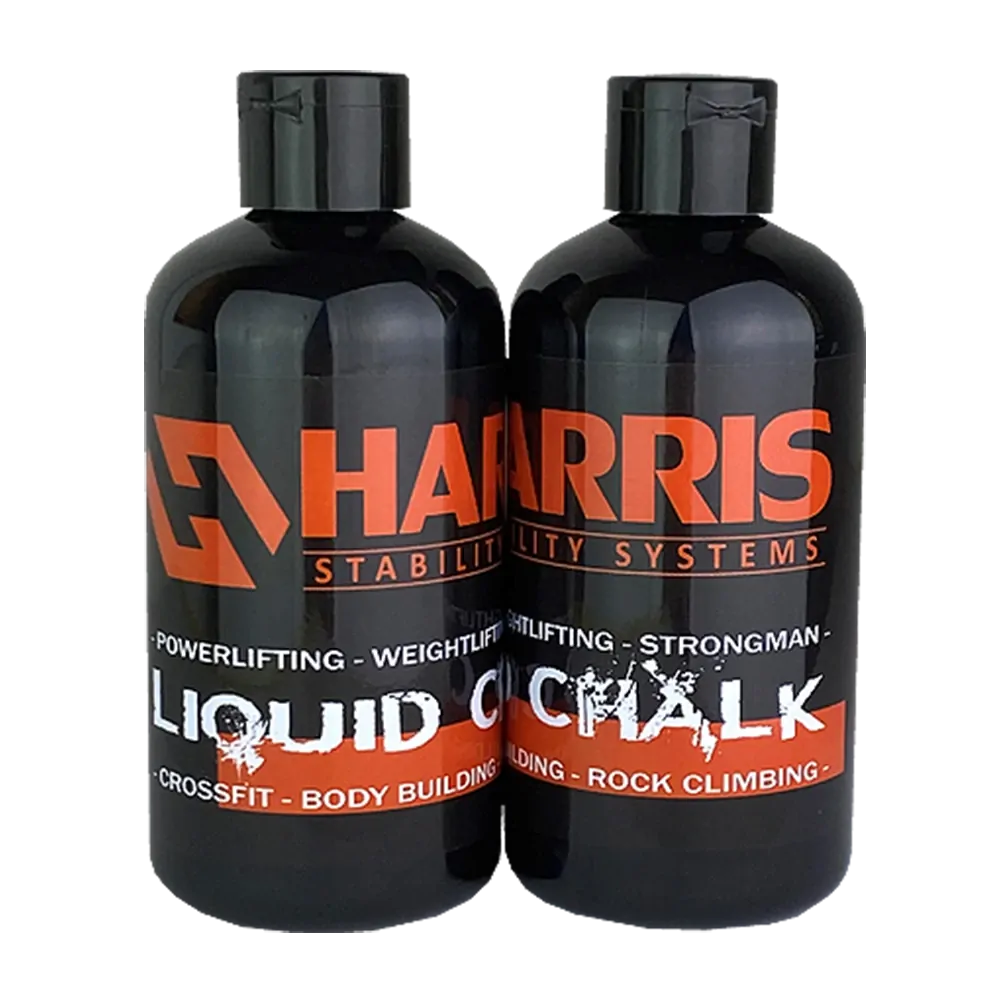
Liquid Chalk combines magnesium carbonate with alcohol to create a fast-drying solution.
Simply apply a small amount to your hands, rub it in and allow it to dry.
Once dry, it leaves a thin layer of chalk that provides excellent grip without creating the mess associated with traditional loose chalk.
Because it stays on your hands longer, many athletes find they need to reapply it less frequently than block chalk.
Benefits of Harris Liquid Chalk
The Harris Liquid Chalk range has become a favourite among Australian strength athletes because it combines excellent grip with convenience.
Benefits include:
-
Less mess than traditional chalk.
-
Long-lasting grip.
-
Fast drying.
-
Easy to carry in your gym bag.
-
Suitable for commercial gyms that restrict loose chalk.
-
Helps reduce sweaty hands during heavy lifting.
Whether you're training in a commercial gym or at home, liquid chalk is one of the easiest ways to improve your grip without covering your equipment in chalk dust.
When Should You Use Liquid Chalk?
Liquid chalk is ideal for:
-
Powerlifting
-
Strongman
-
Olympic Weightlifting
-
CrossFit
-
Rock Climbing
-
Gymnastics
-
General Strength Training
It's especially useful in gyms where traditional chalk is discouraged or prohibited.
What Is Block Chalk?
Traditional Athletic Chalk Blocks are made from compressed magnesium carbonate.
Simply rub the block across your hands before lifting.
Many experienced powerlifters and weightlifters prefer block chalk because it allows them to control exactly how much chalk they apply.
It also provides maximum grip for heavy lifting.
What Is Chalk Crush?
Chalk Crush is loose chalk made from crushed magnesium carbonate.
Because it's already broken down into smaller pieces, it's quick to apply and is commonly used in:
-
Powerlifting gyms
-
Strongman training
-
Weightlifting clubs
-
Home gyms
It provides the same excellent grip as block chalk while being quicker to apply between heavy attempts.
Which Harris Chalk Is Right For You?
Best for:
-
Commercial gyms
-
CrossFit
-
General strength training
-
Travelling athletes
-
Clean training environments
Best for:
-
Powerlifting
-
Olympic Weightlifting
-
Home gyms
-
Maximum grip
Many experienced strength athletes still prefer traditional chalk blocks for heavy training sessions.
Best for:
-
Powerlifting clubs
-
Strongman gyms
-
Shared training facilities
-
Athletes who prefer loose chalk
Perfect for:
-
Gym bags
-
Competitions
-
Travel
-
Quick application between sets
Its compact size makes it easy to keep with your lifting gear wherever you train.
Both products improve grip extremely well.
The best choice depends on where you train.
Choose Liquid Chalk if you:
-
Train in a commercial gym.
-
Want minimal mess.
-
Need something portable.
-
Prefer longer-lasting application.
Choose Athletic Chalk Blocks if you:
-
Train at home.
-
Lift in a dedicated strength gym.
-
Want maximum grip.
-
Prefer traditional chalk.
Choose Chalk Crush if you:
-
Train in a powerlifting or strongman gym.
-
Prefer loose chalk.
-
Want fast application during heavy sessions.
Frequently Asked Questions
Does chalk help you lift more weight?
Chalk doesn't increase strength directly. It improves grip, allowing you to hold the bar more securely during heavy lifts.
Is liquid chalk as good as block chalk?
For most athletes, yes. Many lifters find liquid chalk provides excellent grip while being cleaner and more convenient than traditional chalk.
Is liquid chalk allowed in commercial gyms?
Many commercial gyms that prohibit loose chalk still allow liquid chalk because it creates far less mess. Always check your gym's policies.
What sports use gym chalk?
Gym chalk is commonly used in:
-
Powerlifting
-
Olympic Weightlifting
-
Strongman
-
CrossFit
-
Rock Climbing
-
Gymnastics
Does liquid chalk dry your hands?
Because liquid chalk contains alcohol, it can dry the skin with frequent use. Washing your hands after training and using a moisturiser can help keep your skin in good condition.
Final Thoughts
Good grip is essential for almost every strength sport.
Whether you choose Liquid Chalk, Athletic Chalk Blocks or Chalk Crush, using quality chalk allows you to focus on your lifting rather than worrying about losing your grip.
From commercial gyms through to elite powerlifting competitions, Harris Stability Systems offers a complete range of chalk products trusted by Australian strength athletes.