Elbow Sleeves for Bench Press | Strongman & Overhead Press Guide
Author: Harris Stability Systems Last Updated: 1 September 2026

When Do Elbow Sleeves Help Most for Bench Press, Strongman and Overhead Work?
Elbow sleeves are commonly worn during bench press, overhead pressing and strongman training because they provide compression and help retain warmth around the elbows.
They can be particularly practical during pressing sessions with several working sets, long rest periods or repeated changes between exercises.
However, elbow sleeves do not correct pressing technique, prevent injury or replace an appropriate warm-up. Their main role is to provide a close-fitting layer around the elbow during training.
This guide explains when elbow sleeves are most useful, how different sleeve styles compare and how to decide whether they suit your pressing sessions.
What Do Elbow Sleeves Do?
Elbow sleeves are fitted garments worn around the elbow joint.
Depending on their material, thickness and construction, they can provide:
• Compression around the elbow
• Warmth during training
• A close-fitting feel
• Coverage against contact with equipment
• A consistent piece of pressing equipment
Some elbow sleeves are flexible enough for general gym training, while others are much stiffer and intended for heavy pressing sessions.
Elbow sleeves should not be confused with elbow wraps. Sleeves are pulled over the arm, while wraps are wound around the elbow and adjusted manually.
When Are Elbow Sleeves Most Useful?
Elbow sleeves are commonly used when a lifter wants compression and warmth during repeated pressing work.
They may be particularly useful during:
• Bench press sessions
• Overhead press training
• Strongman pressing
• Bodybuilding workouts
• High-volume upper-body sessions
• Training in colder conditions
• Long sessions with extended rest periods
• Workouts containing several pressing exercises
Whether sleeves are worthwhile depends on the exercise, the sleeve construction and the lifter’s preference.
Elbow Sleeves for Bench Press
Bench press places the elbows through repeated flexion and extension under load.
A typical session may include:
• Competition-style bench press
• Close-grip bench press
• Incline bench press
• Paused bench press
• Dumbbell bench press
• Board press
• Pin press
• Bench press accessories
Some lifters prefer wearing elbow sleeves throughout their working sets because the sleeves help maintain warmth and provide a consistent compressed feel around the elbows.
Flexible sleeves may suit longer bench sessions and accessory work. Stiffer sleeves may appeal to lifters who prefer a firmer fit during heavier pressing.
Elbow sleeves do not change the need for an appropriate bench setup, grip position, bar path or load selection.
Elbow Sleeves for High-Volume Bench Training
Higher-volume bench programs can include several pressing sessions each week or many working sets within one workout.
Elbow sleeves may be practical during:
• Repeated bench sets
• Bench variations
• Pressing supersets
• Long upper-body sessions
• Bodybuilding-style chest and triceps work
A more flexible sleeve is often easier to wear throughout a high-volume session because it allows the elbow to move without feeling excessively restrictive.
Very stiff sleeves may be less comfortable if the session includes many repetitions or several different exercises.
Elbow Sleeves for Overhead Press
Overhead pressing includes a range of strict and dynamic movements.
Examples include:
• Strict press
• Push press
• Military press
• Seated overhead press
• Dumbbell shoulder press
• Axle press
• Log press
• Viking press
Elbow sleeves are often worn during these movements for warmth and compression.
The best sleeve depends on the type of pressing being performed.
A flexible sleeve may suit strict press, dumbbell work and higher-repetition training. A firmer sleeve may appeal to athletes completing heavy log, axle or push-press sessions.
The sleeve should not interfere with the athlete’s ability to rack, clean or control the implement.
Elbow Sleeves for Strongman
Strongman athletes perform a wide variety of pressing events.
These may include:
• Log clean and press
• Axle clean and press
• Circus dumbbell
• Viking press
• Block press
• Keg press
• Repetition overhead events
These movements can involve heavy loads, repeated cleans and unusual implements.
Many strongman athletes use elbow sleeves because they can remain in place throughout both the clean and press portions of an event.
A strongman athlete may prefer:
• More flexible sleeves for medleys and repeated cleans
• Firmer sleeves for heavy overhead work
• Sleeves that stay securely positioned
• A fit that does not interfere with wrist wraps or other equipment
Competition rules can vary between events. Athletes should confirm whether elbow sleeves are allowed and whether any restrictions apply.
Elbow Sleeves for Bodybuilding
Bodybuilding and general upper-body sessions often include several pressing and arm exercises.
Elbow sleeves may be worn during:
• Dumbbell pressing
• Machine chest press
• Shoulder press
• Close-grip bench press
• Triceps pressing
• Dips
• Skull crushers
• Cable work
A flexible sleeve is usually the more practical choice for this type of training.
The goal is generally to maintain a comfortable fit across many repetitions rather than use the stiffest sleeve available.
Elbow Sleeves During Long Training Sessions
Elbow sleeves may be particularly practical during sessions containing several upper-body movements.
A lifter may begin with bench press, move to overhead pressing and then complete accessory work.
During a long session, sleeves can remain in place and provide the same compressed feel across several exercises.
This may be convenient when training includes:
• Long rest periods
• Several pressing variations
• Alternating upper-body exercises
• Cold gym environments
• Extended event sessions
However, sleeves should be removed or adjusted if they cause numbness, excessive discomfort or restricted movement.
Elbow Sleeves in Cold Training Conditions
Some lifters prefer elbow sleeves when training in colder gyms, sheds or garages.
The material provides an additional layer around the elbow and can help retain warmth during the session.
This may be useful during:
• Winter training
• Outdoor strongman sessions
• Garage gym workouts
• Long rest periods between heavy sets
• Competitions with extended waiting periods
Elbow sleeves still do not replace a gradual warm-up.
Warm-up sets should be used to prepare for the movement and load planned for the day.
Flexible vs Stiff Elbow Sleeves
One of the most important decisions is how stiff the sleeves should be.
Flexible Elbow Sleeves
Flexible sleeves are generally easier to wear across longer workouts.
They may suit:
• General gym training
• Bodybuilding
• High-volume bench press
• Dumbbell pressing
• Accessory work
• Lifters new to elbow sleeves
They usually allow more freedom of movement and are easier to put on and remove.
Stiff Elbow Sleeves
Stiffer sleeves provide a firmer and more restrictive feel.
They may suit:
• Heavy bench press sessions
• Strongman overhead work
• Heavy log or axle press
• Low-repetition pressing
• Lifters who prefer stronger compression
The stiffest option is not automatically the best.
A sleeve that is excessively stiff for the session may be difficult to wear, uncomfortable over many repetitions or awkward during movements that require more elbow movement.
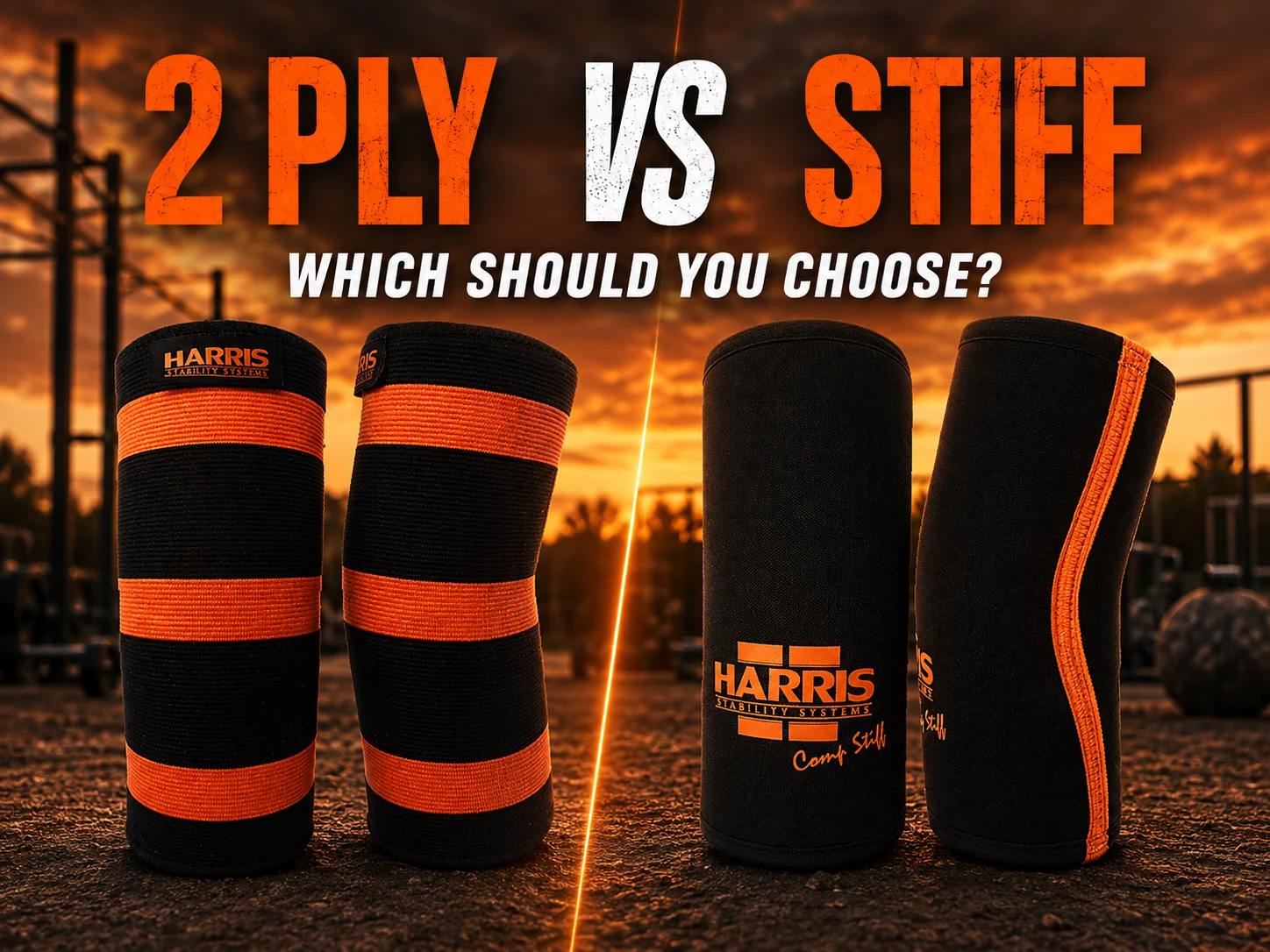
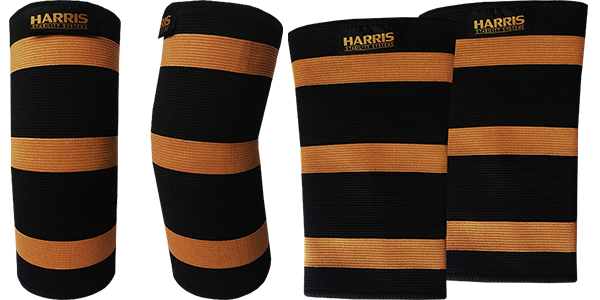
Two-Ply Elbow Sleeves
Two-ply elbow sleeves use layered construction to create a more substantial sleeve.
The Harris 2Ply Elbow Sleeves may suit lifters who want a firmer sleeve than a basic flexible model without automatically choosing the stiffest option available.
Depending on their confirmed construction and fit, they may be suitable for:
• Bench press
• Overhead press
• Strongman pressing
• General strength training
• Moderate-to-heavy pressing sessions
The exact feel will depend on the sleeve’s materials, construction and sizing.
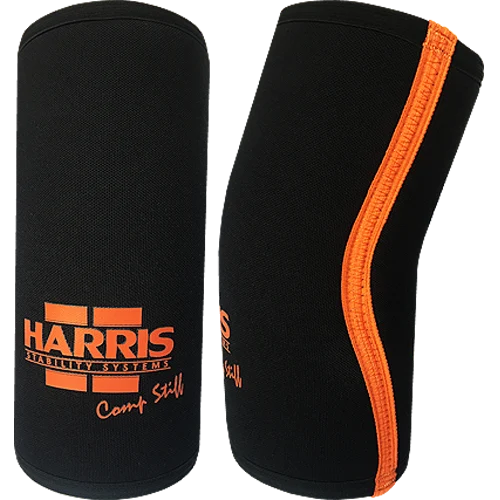
Competition-Stiff Elbow Sleeves
Competition-stiff elbow sleeves are designed for lifters who prefer a very firm fit during heavy pressing.
The Harris Comp Stiff Elbow Sleeves 9mm may appeal to:
• Strongman athletes
• Heavy bench press lifters
• Log and axle press competitors
• Lifters performing low-repetition pressing
• Athletes who prefer a highly structured sleeve
A stiff sleeve may take more effort to put on and may not be the most comfortable choice for high-repetition or general gym work.
The word “competition” in a product name does not guarantee approval for every federation or event. Current equipment rules should always be checked before competing.
Two-Ply vs Competition-Stiff Elbow Sleeves
|
Feature |
||
|---|---|---|
|
General feel |
Firm |
Very firm |
|
Flexibility |
Moderate |
Lower |
|
Ease of putting on |
Usually easier |
Usually more difficult |
|
High-repetition training |
More suitable |
May feel restrictive |
|
Heavy pressing |
Suitable |
Designed for a firmer feel |
|
General gym use |
More versatile |
More specialised |
|
Strongman pressing |
Suitable |
May suit heavy event work |
|
Best for |
Mixed pressing sessions |
Heavy, lower-repetition work |
The right choice depends on the training performed most often.
A lifter completing bench, dumbbell pressing and bodybuilding work may prefer a more versatile two-ply sleeve.
A strongman athlete focused on heavy log or axle pressing may prefer a stiffer model.
When Elbow Sleeves May Not Be Necessary
Elbow sleeves are optional training equipment.
They may not be needed during:
• Light warm-up sets
• Technique sessions
• Lower-body workouts
• Exercises where they interfere with movement
• Grip-focused sessions
• Training where the lifter simply prefers no sleeve
Some lifters wear sleeves throughout every pressing session. Others reserve them for heavier sets.
Neither approach is automatically correct.
Elbow Sleeves Should Not Be Used to Hide Pain
Elbow sleeves are not a treatment for pain or injury.
A sleeve may change how the area feels during training, but this does not identify or address the cause of ongoing discomfort.
Persistent or worsening elbow pain should not simply be covered up by tighter equipment.
Training load, exercise selection, technique and recovery may all need to be reviewed. Appropriate professional advice may also be required.
Elbow sleeves and elbow wraps are different products.
|
Feature |
||
|---|---|---|
|
Design |
Pull-on sleeve |
Long material wrapped manually |
|
Adjustment |
Determined by size and construction |
Adjusted by wrapping tension |
|
Setup time |
Quick |
Slower |
|
Consistency |
Similar fit each session |
Depends on wrapping |
|
Common use |
General pressing and strongman |
Heavy pressing |
|
Ease of removal |
Usually easier |
Requires unwrapping |
Sleeves are generally simpler to use and easier to wear across an entire session.
Wraps allow the lifter to control the tension but require more time and practice to apply consistently.
Elbow sleeves and wrist wraps support different areas.
Elbow sleeves sit around the elbow.
Wrist wraps are worn around the wrist to limit unwanted wrist movement during pressing.
Many lifters use both during:
• Bench press
• Overhead press
• Strongman log press
• Axle press
• Heavy dumbbell pressing
One product does not replace the other.
Elbow Sleeves vs Bench Press Aids
Elbow sleeves should also not be confused with bench press assistance devices.
Products such as the Harris True Elite Compression Band or Recoil Triple-Ply Bench Press Aid sit across the upper body and arms rather than only around the elbow.
Their construction and use are different from elbow sleeves.
Elbow sleeves provide compression and warmth around the elbow. Bench press aids are designed to interact more directly with the pressing movement.
How Tight Should Elbow Sleeves Be?
Elbow sleeves should fit securely without causing numbness, tingling or excessive pain.
A properly fitted sleeve should:
• Stay in place during pressing
• Feel evenly compressed
• Allow the elbow to bend and straighten
• Avoid rolling excessively
• Avoid cutting sharply into the arm
• Be removable after training
A sleeve that slides throughout the session may be too large.
A sleeve that cannot be worn without severe discomfort may be too small or too stiff for the intended use.
How to Measure for Elbow Sleeves
Sizing methods vary between manufacturers.
Depending on the product, the measurement may be taken:
• Around the elbow joint
• Above the elbow
• Below the elbow
• With the arm straight
• With the arm slightly bent
Always follow the product-specific sizing guide.
Do not choose a size based only on a sleeve from another brand, as construction and sizing can differ.
Should You Size Down?
Some lifters size down because they want a tighter competition-style fit.
However, sizing down can make sleeves:
• Harder to put on
• More uncomfortable
• More restrictive
• Difficult to remove
• Unsuitable for long sessions
For everyday training, the recommended size is usually the better starting point.
Only choose a smaller size when the product instructions support it and you understand how the tighter fit will affect use.
When Should You Put Elbow Sleeves On?
Elbow sleeves can be put on before warm-up sets or before heavier working sets.
Common approaches include:
Wearing Them for the Entire Session
This may suit lifters who want warmth and compression from the beginning of the workout.
Adding Them Before Working Sets
This may suit lifters who prefer completing light warm-ups without equipment.
Wearing Them Only for the Heaviest Sets
This may suit athletes using very stiff sleeves that are uncomfortable to wear for extended periods.
The most practical method depends on the sleeve and the session.
How to Put Elbow Sleeves On
A general method is:
1. Make sure the sleeve is the correct way up.
2. Pull it over the hand and forearm.
3. Position the centre of the sleeve over the elbow.
4. Smooth out any folded material.
5. Check that the sleeve does not interfere with wrist wraps.
6. Bend and straighten the arm before beginning the set.
Very stiff sleeves may require a different method. Follow the manufacturer’s fitting instructions where provided.
Common Elbow Sleeve Mistakes
Choosing the Stiffest Sleeve Available
A very stiff sleeve may be unnecessary for bodybuilding, general gym work or high-repetition pressing.
Choose according to the session rather than assuming more stiffness is always better.
Buying the Wrong Size
A sleeve that is too large may slide.
A sleeve that is too small may be difficult or impractical to wear.
Use the current sizing chart.
Expecting Sleeves to Correct Technique
Elbow sleeves do not correct:
• Grip width
• Bar path
• Pressing setup
• Load selection
• Exercise execution
• Programming problems
Those issues need to be addressed separately.
Treating Sleeves as Medical Equipment
Elbow sleeves are training equipment, not medical devices.
They should not be presented as treating pain, healing injuries or preventing joint problems.
Wearing Stiff Sleeves for Every Exercise
A stiff sleeve may suit heavy bench or overhead work but feel unnecessary during cables, light dumbbells or warm-up exercises.
Ignoring Competition Rules
Not every federation or strongman event uses the same equipment rules.
Check the current rules before competition.
Failing to Care for the Sleeves
Sweat and repeated use can affect the fabric over time.
Follow the product care instructions and allow sleeves to dry after training.
How to Choose the Right Elbow Sleeves
Choose a More Flexible Sleeve If You:
• Perform high-volume bench press
• Train for bodybuilding
• Want sleeves for general gym use
• Complete several pressing exercises
• Prefer easier fitting
• Want to wear them for longer sessions
Choose a Firmer Two-Ply Sleeve If You:
• Perform moderate-to-heavy bench press
• Combine bench and overhead work
• Train strongman
• Prefer a more substantial fit
• Want a sleeve for varied pressing sessions
Choose a Competition-Stiff Sleeve If You:
• Focus on heavy overhead pressing
• Train log or axle press
• Prefer a highly rigid feel
• Perform lower-repetition pressing
• Understand that it may be harder to put on
• Have confirmed that the sleeve suits the relevant competition rules
The best sleeve is the one that matches the majority of the pressing work you perform.
Frequently Asked Questions
What do elbow sleeves do?
Elbow sleeves provide compression and help retain warmth around the elbow during training.
Are elbow sleeves useful for bench press?
Many lifters wear them during bench press, particularly for repeated working sets and longer pressing sessions.
Are elbow sleeves good for overhead press?
They are commonly used for strict press, push press, log press, axle press and other overhead movements.
Are elbow sleeves useful for strongman?
Yes. Strongman athletes often use them during log, axle, Viking press and other overhead events.
Do elbow sleeves increase pressing strength?
Elbow sleeves should not be presented as directly increasing strength. Their main functions are compression, warmth and providing a particular training feel.
Do elbow sleeves prevent injury?
No equipment can guarantee injury prevention. Elbow sleeves should not replace appropriate technique, programming or load management.
Can elbow sleeves treat elbow pain?
No. They are not a treatment for pain or injury. Persistent discomfort should be assessed rather than hidden with equipment.
Should elbow sleeves be tight?
They should fit securely without causing numbness, tingling or excessive discomfort.
Are stiff elbow sleeves better?
Not always. Stiff sleeves may suit heavy pressing, while more flexible sleeves are usually more practical for high-volume or general training.
What is the difference between two-ply and competition-stiff sleeves?
Two-ply sleeves generally provide a firm but more versatile fit. Competition-stiff sleeves are typically more rigid and specialised for heavy pressing.
Can beginners use elbow sleeves?
Yes, although they are optional and should not replace learning sound pressing technique.
Can elbow sleeves be worn for bodybuilding?
Yes. More flexible sleeves may suit higher-repetition chest, shoulder and triceps training.
Can I wear elbow sleeves with wrist wraps?
Yes. Many lifters use both, provided the equipment fits without interfering with each other.
Are elbow sleeves allowed in powerlifting?
Rules vary between federations and divisions. Check the current rules before competing.
Are elbow sleeves allowed in strongman?
Rules vary by competition and event. Confirm the equipment requirements with the organiser.
Final Thoughts
Elbow sleeves are most useful during bench press, overhead work and strongman training when a lifter wants compression and warmth around the elbows.
Flexible sleeves may suit high-volume bench training, bodybuilding and general gym sessions. Firmer two-ply sleeves may suit mixed strength training, while competition-stiff sleeves are generally more specialised for heavy pressing.
The Harris 2Ply Elbow Sleeves may suit lifters looking for a substantial but versatile sleeve for bench press, overhead work and general strength training.
The Harris Comp Stiff Elbow Sleeves 9mm may better suit strongman athletes and heavy pressers who prefer a much firmer fit.
Choose the sleeve according to the exercises, repetitions and training style you perform most often—not simply the stiffest option available.