Barbell Collars vs Spring Clips | Best for Plate Security
Author: Harris Stability Systems Last Updated: 10 August 2026

Barbell Collars vs Spring Clips: Which Is Better for Strength Training? (Australia)
Why More Australian Lifters Are Switching to Locking Barbell Collars
If you've ever had weight plates slide along the bar during a squat, deadlift or overhead press, you'll know how distracting—and potentially dangerous—it can be.
One of the most common questions we hear is:
"Do I really need barbell lock collars, or are spring clips good enough?"
While spring clips have been a gym staple for decades, modern Barbell Lock Collars provide significantly better plate security, are quicker to use and offer greater confidence during heavy lifting.
Whether you're training for powerlifting, CrossFit, Olympic weightlifting or general strength, choosing the right collars helps keep your plates exactly where they belong.
Why Are Barbell Collars Important?
Barbell collars are designed to stop weight plates moving along the barbell sleeve during training.
Keeping the plates secure helps:
• Reduce unwanted plate movement.
• Improve bar stability.
• Increase confidence during heavy lifts.
• Speed up loading and unloading.
• Improve safety during dynamic movements.
They're particularly important during:
• Squats
• Deadlifts
• Bench Press
• Olympic Weightlifting
• CrossFit
• Strongman Training
• Functional Fitness
What Are Spring Clips?
Spring clips are the traditional wire-style collars found in many commercial gyms.
They work by applying pressure to the barbell sleeve when squeezed into position.
Although inexpensive and widely available, spring clips have several limitations.
As bars wear over time or sleeves become slightly undersized, spring clips often lose their grip and allow the plates to move during training.
For lighter gym sessions they may be adequate, but many serious strength athletes eventually upgrade.
What Are Locking Barbell Collars?
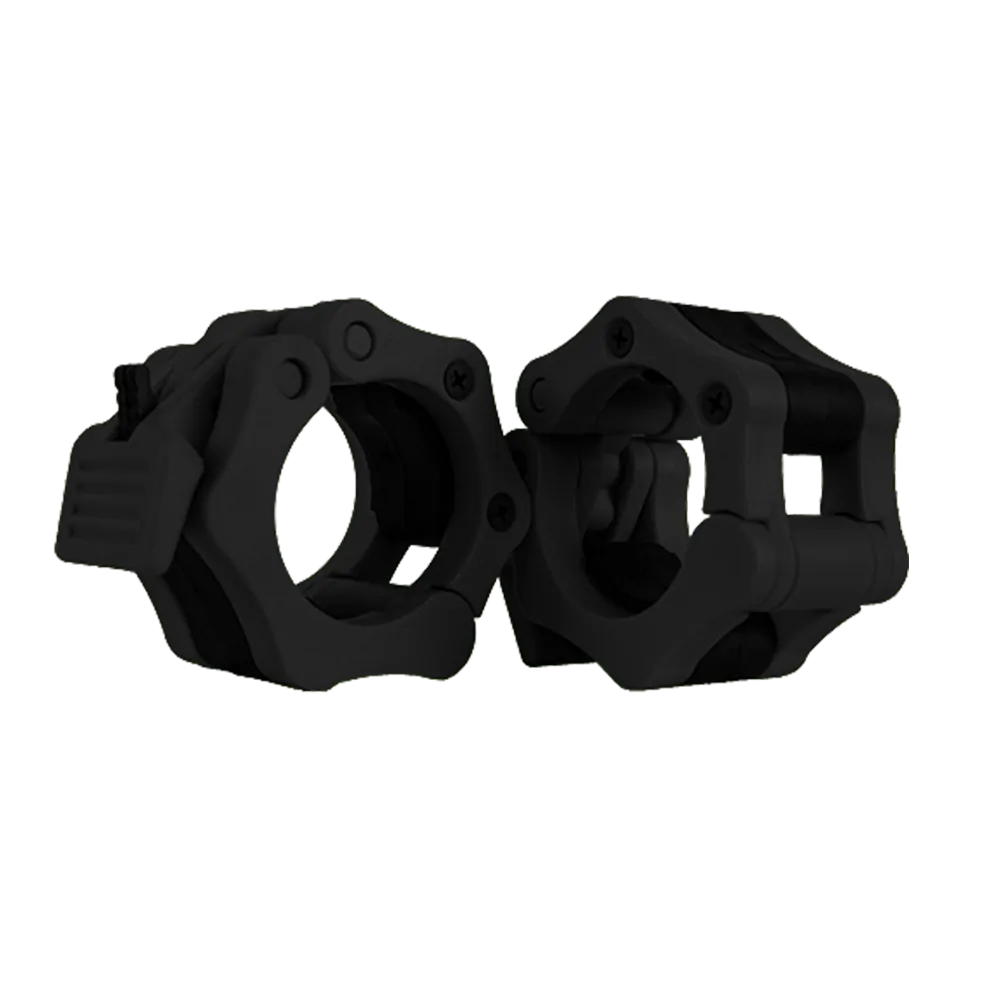
Locking Barbell Collars use a quick-release locking mechanism that clamps firmly around the barbell sleeve.
Rather than relying purely on spring tension, they provide consistent clamping force that keeps plates securely in place throughout the lift.
Most athletes immediately notice:
• Faster loading.
• Better plate security.
• Easier one-handed operation.
• More confidence under heavy weights.
Barbell Collars vs Spring Clips
Plate Security
This is where locking collars clearly outperform spring clips.
Because they clamp tightly around the barbell sleeve, quality lock collars minimise plate movement far more effectively.
This becomes particularly noticeable during:
• Heavy squats.
• Deadlifts.
• Olympic lifts.
• Strongman events.
• CrossFit workouts.
Ease of Use
Spring clips require considerable hand strength and become increasingly awkward after repeated plate changes.
Lock collars can usually be fitted or removed in seconds using a simple lever mechanism.
If you're constantly changing weights during your workout, the difference quickly becomes obvious.
Durability
Quality Harris Barbell Lock Collars are built to withstand years of regular training.
Unlike spring clips, they don't gradually lose tension through repeated use.
Training Confidence
One of the biggest advantages of locking collars is confidence.
When you know the plates are secure, it's much easier to focus entirely on the lift instead of worrying about equipment moving during the set.
Who Should Use Locking Barbell Collars?
Lock collars are ideal for:
• Powerlifters.
• Strongman Athletes.
• Olympic Weightlifters.
• CrossFit Athletes.
• Bodybuilders.
• Home Gym Owners.
• Commercial Gyms.
Anyone training regularly with Olympic barbells will benefit from a quality pair of locking collars.
Are Spring Clips Still Good Enough?
For lighter recreational training, spring clips can still perform adequately.
However, once training becomes heavier or more dynamic, most lifters prefer the additional security and convenience of locking collars.
Many athletes who upgrade never go back.
Frequently Asked Questions
Do I need barbell collars?
Yes. Barbell collars help secure weight plates and improve safety during training.
Are lock collars better than spring clips?
For most strength athletes, yes. They provide greater plate security, faster adjustment and improved confidence during heavy lifting.
Can I use lock collars for deadlifts?
Absolutely. They're commonly used for deadlifts, squats, bench press and Olympic lifting.
Will lock collars fit Olympic barbells?
Most quality lock collars are designed to fit standard 50mm Olympic barbell sleeves. Always check the product specifications before purchasing.
Do professional lifters use locking collars?
Yes. Many competitive powerlifters, CrossFit athletes, strongman competitors and weightlifters choose locking collars because of their reliability and ease of use.
Final Thoughts
While spring clips have been used in gyms for many years, modern Harris Barbell Lock Collars offer a faster, more secure and more reliable solution for today's strength athletes.
Whether you're training in a commercial gym, building a home gym or preparing for competition, quality lock collars help keep your plates secure so you can focus entirely on your performance.
For athletes who value safety, convenience and confidence under the bar, upgrading to Harris Barbell Lock Collars is one of the simplest improvements you can make to your training equipment.